Weighted Blanket vs Weighted Sleep Mask: Which Makes More Sense?
Quick answer: weighted blanket or weighted sleep mask?
A weighted blanket usually makes more sense if you want full-body pressure, a cozy “held” feeling, and you do not sleep hot. A weighted sleep mask usually makes more sense if light is the main problem, you travel often, you sleep hot, or you want a smaller, cheaper experiment before buying a heavier blanket.
Neither one is a magic sleep button. Some people find gentle pressure calming, and blocking light may support better sleep timing and next-day alertness. But results vary, and the evidence is stronger for some uses than others. Anyone promising “guaranteed deep sleep in one night” is selling you a pit strategy written in crayon.
Here is the clean decision:
| If this sounds like you… | Start with… | Why |
|---|---|---|
| You wake from streetlights, sunrise, hotel lights, or partner screen glow | Weighted sleep mask | Blocks light and adds light facial pressure |
| You feel restless and like full-body pressure would be calming | Weighted blanket | More body coverage and pressure input |
| You sleep hot | Weighted sleep mask | Less heat buildup than a blanket |
| You are a side sleeper | Contoured sleep mask or lighter blanket | Fit matters; bulky masks and heavy blankets can annoy side sleepers |
| You travel often | Weighted sleep mask | Portable, cheap, easy to pack |
| You have breathing, circulation, mobility, or sleep apnea concerns | Ask a clinician before using a weighted blanket | Safety is more important than gadgets |
What is a weighted blanket?
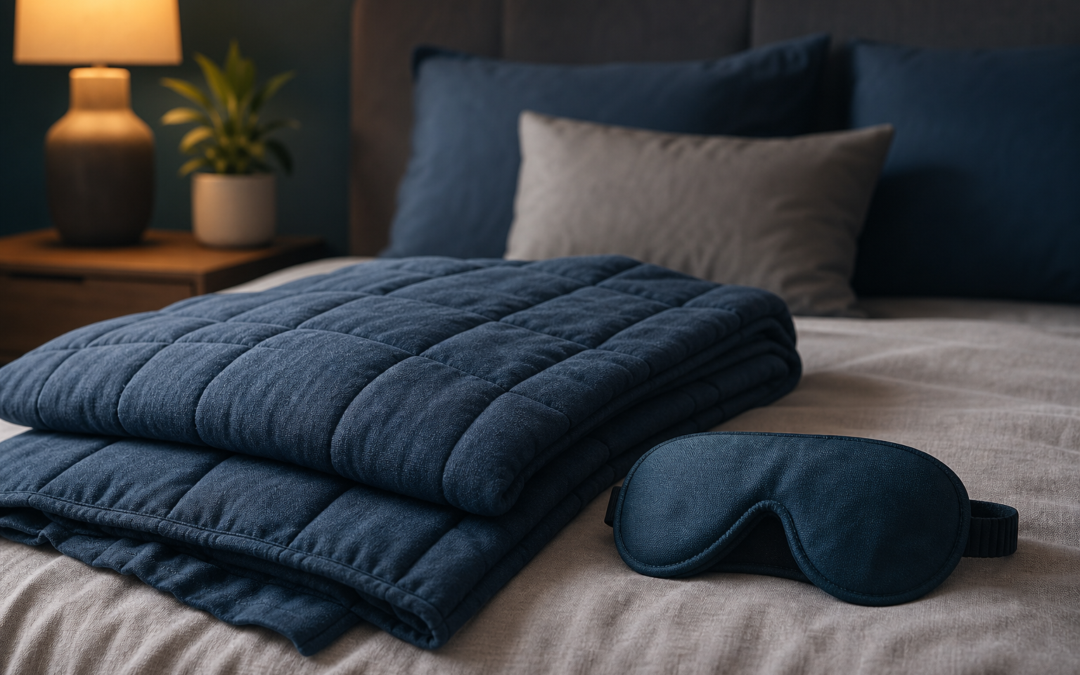
A weighted blanket is a blanket filled with glass beads, plastic pellets, chains, or other weight-adding material. The idea is to spread gentle pressure across the body, sometimes described as deep pressure touch.
People often use weighted blankets because they may feel:
- Grounding
- Cozy
- Calming
- Less restless
- More tucked-in without needing multiple layers
The research is still developing. A 2024 review in Frontiers in Psychiatry found that many included studies suggested weighted blankets may improve sleep quality or related symptoms in certain groups, but the authors also called for larger, higher-quality randomized trials. Harvard Health also notes that weighted blankets may improve subjective insomnia symptoms for some people, while objective sleep measures have not always improved.
Translation: promising, not magic. Very different things.
Weighted blanket pros
- Covers the whole body with steady pressure.
- May feel calming for people who like a tucked-in sensation.
- Can be used without changing the bedroom layout.
- May pair well with a cool, dark, quiet room.
- Can be shared with existing bedding if the size and weight are right.
Weighted blanket cons
- Can trap heat.
- More expensive than most sleep masks.
- Annoying to wash or move.
- May feel restrictive for some sleepers.
- Not ideal for everyone with breathing, mobility, circulation, or certain medical concerns.
What is a weighted sleep mask?
A weighted sleep mask is an eye mask that blocks light and adds gentle pressure over the eye area, forehead, or surrounding facial area. Some use beads or padding; others use a contoured design that avoids direct pressure on the eyes.
The most evidence-backed part of a sleep mask is not the weight. It is darkness.
A study published in Sleep found that wearing an eye mask during overnight sleep improved next-day episodic learning and alertness in healthy young adults compared with a light-exposure condition. Harvard Health summarized the same study and emphasized the broader “bright days, dark nights” principle: light is a major cue for the circadian system, and nighttime light can interfere with sleep biology.
Cleveland Clinic also notes that sleep masks may help by blocking ambient light and creating a calming bedtime ritual, while reminding readers that masks are not a cure-all for insomnia or sleep disorders.
Weighted sleep mask pros
- Blocks light directly at the eyes.
- Smaller and usually cheaper than a weighted blanket.
- Travel-friendly.
- Less likely to overheat the whole body.
- Easy to test for a week without changing bedding.
Weighted sleep mask cons
- Pressure on the face may bother some people.
- Bad fit can leak light or slide off.
- Bulky masks may annoy side sleepers.
- Direct pressure on the eyes is not ideal; comfort and design matter.
- It will not fix noise, pain, breathing issues, caffeine timing, or revenge-bedtime phone scrolling. Shame. Would have been convenient.
The real comparison: what problem are you solving?
Do not choose based on which product looks more “sleep optimized.” Choose based on the actual friction point.
If light wakes you up: choose the sleep mask
If your room has streetlights, early sunrise, partner screen glow, hallway light, or hotel curtains that quit halfway through the job, a sleep mask is the obvious first move.
A weighted sleep mask may help because it combines two things:
- Light blocking — the useful part with stronger support.
- Gentle pressure — a comfort feature some people find calming.
Start here if you already know you sleep better in darker rooms or with blackout curtains.
Internal link opportunity: Link to FSF’s existing guide: Best Sleep Masks: Side Sleeper Picks, Light Block Test, and Comfort.
If restlessness is the issue: consider the weighted blanket
If your problem is more body restlessness than light exposure, a weighted blanket may make more sense. Some sleepers like the steady pressure and find it helps them feel settled at bedtime.
But keep the claim soft: a weighted blanket may support relaxation for some people. It should not be positioned as a cure for insomnia, anxiety, ADHD, autism, pain, or any sleep disorder.
Internal link opportunity: Link to FSF’s existing weighted blanket explainer: Weighted Blankets: Do They Help You Sleep, and How to Pick the Right Weight?.
If you sleep hot: be careful with the blanket
Weighted blankets can add warmth. That is lovely in winter and extremely rude in July.
If you already wake sweaty or kick off blankets, start with a sleep mask or improve your cooling setup before adding weight over your whole body. A breathable weighted blanket can help, but it still adds a layer.
Internal link opportunity: Link to [Best Bedroom Temperature for Sleep: Cool-Room Setup Guide](drafts/2026-05-13-best-bedroom-temperature-for-sleep.md) once published, plus Sheets, Mattress Toppers, and Pillows for Hot Sleepers.
If you are a side sleeper: fit decides the winner
Side sleepers need to be pickier. A bulky weighted mask can press into the pillow, shift around, or put pressure where you do not want it. Look for a contoured mask, adjustable strap, and soft edges.
Weighted blankets can work for side sleepers, but too much weight may make turning over feel like pit crew training. If you change positions often, choose a lighter blanket or skip the blanket and start with a mask.
Internal link opportunity: Link to Best Sleep Masks and FSF pillow content like Best Pillows for Every Sleep Position.
Safety: who should be cautious?
This is the part where we brake before the wall.
Weighted sleep products are not automatically right for everyone. Be cautious with weighted blankets if you:
- Have suspected or diagnosed sleep apnea.
- Have breathing problems, including significant respiratory disease.
- Have severe heart or circulation issues.
- Have mobility limitations that make it hard to remove the blanket.
- Feel claustrophobic or panicky under weight.
- Are buying for a child, older adult, or someone who cannot remove the blanket independently.
Harvard Health notes that weighted blankets are generally considered safe for healthy adults if the person can lift the blanket off when needed. Cleveland Clinic reporting has also advised that people with respiratory problems, sleep apnea, diabetes, or severe heart conditions avoid weighted blankets or seek medical guidance.
For weighted sleep masks, avoid designs that press hard directly on the eyes. If you have eye conditions, recent eye surgery, glaucoma concerns, chronic dry eye, headaches, facial pain, or questions about pressure around the eyes, ask a clinician before using a weighted mask.
And if poor sleep is persistent, severe, or paired with breathing pauses, loud snoring, gasping, morning headaches, or major daytime sleepiness, do not try to gadget your way through it. Get evaluated. The sleep accessory can wait in the garage.
How to choose a weighted blanket
If the weighted blanket is the better fit, shop by comfort and safety first.
1. Choose a manageable weight
A common consumer guideline is around 10% of body weight, but this is not a medical rule. The right blanket should feel calming, not trapping. If you are between sizes or unsure, lighter is usually the smarter first test.
2. Check whether you can remove it easily
Before sleeping with it, lie under the blanket and make sure you can roll over, sit up, and remove it without strain. If that feels difficult, it is too heavy or not a good fit.
3. Match it to your heat level
Hot sleepers should look for breathable covers, cooling fabrics, smaller throw sizes, or alternatives like a weighted lap blanket used before bed instead of overnight.
4. Think about cleaning
Weighted blankets can be annoying to wash. Check whether the cover is removable and machine washable. If the care instructions look like a part-time job, you will ignore them. Everyone does.
How to choose a weighted sleep mask
If the mask is the better fit, prioritize blackout performance and comfort over gimmicks.
1. Look for true light blocking
The mask should block light around the nose bridge and sides without needing to be painfully tight.
2. Avoid heavy pressure on the eyes
Gentle pressure around the brow or face may feel calming. Direct pressure on the eyeballs is not the goal. Contoured designs can help create space over the eyes.
3. Choose side-sleeper-friendly shaping
If you sleep on your side, avoid thick side panels or bulky straps that dig into your ear or temple.
4. Test it for a full week
One night is noisy data. Try the mask for five to seven nights and track:
- Did you fall asleep easier?
- Did you wake less from light?
- Did it stay on?
- Did it cause pressure, warmth, headaches, or eye discomfort?
- Did morning alertness feel better?
If the answer is mostly “no,” congratulations: you saved yourself from forcing a bad setup. That is optimization, not failure.
Can you use both?
Yes, some people use both a weighted blanket and a sleep mask. But do not buy both at once unless you enjoy not knowing what worked.
Use the FSF one-change rule:
- Test the sleep mask for one week.
- Keep notes.
- If light improves but restlessness remains, test the weighted blanket later.
- If the blanket helps but light still wakes you, add the mask after that.
One variable at a time. Clean telemetry. Less chaos. Mercedes strategy department, take notes.
Best pick by sleep situation
Best first try for most people: weighted sleep mask
A weighted sleep mask is cheaper, simpler, portable, and directly solves light exposure. If you are not sure what you need, this is the lower-risk first experiment.
Best for full-body calming pressure: weighted blanket
If you already love heavy blankets, hate feeling exposed in bed, and do not overheat easily, a weighted blanket may be the better comfort upgrade.
Best for hot sleepers: weighted sleep mask
A mask blocks light without adding a heat-trapping layer over your torso and legs.
Best for travel: weighted sleep mask
Hotel curtains are basically random number generators. A mask gives you control.
Best for persistent insomnia symptoms: neither as the main plan
A blanket or mask may support comfort, but persistent insomnia deserves evidence-based help. Cognitive behavioral therapy for insomnia (CBT-I) is widely recommended as a first-line approach by sleep medicine organizations. If insomnia is ongoing, talk with a healthcare professional rather than relying on accessories alone.
Internal link opportunity: Link to FSF’s Sleep Maintenance Insomnia and Why Do I Wake Up at 3 AM Every Night? posts.
Bottom line
Choose a weighted sleep mask if your biggest issue is light, travel, heat, or you want the simplest first test. Choose a weighted blanket if you want full-body pressure, sleep cool enough to tolerate another layer, and can remove the blanket easily.
Either way, keep expectations realistic. These tools may support a better sleep environment, but they do not replace medical evaluation for persistent insomnia, suspected sleep apnea, breathing pauses, severe daytime sleepiness, pain, medication questions, or concerning symptoms.
Start small, change one variable, track the result. That is how you learn what helps without making sleep more complicated.
- Yu J, Yang Z, Sun S, et al. “The effect of weighted blankets on sleep and related disorders: a brief review.” Frontiers in Psychiatry. 2024. https://pmc.ncbi.nlm.nih.gov/articles/PMC11056563/
- Harvard Health Publishing. “Do weighted blankets help with insomnia?” 2021. https://www.health.harvard.edu/blog/do-weighted-blankets-help-with-insomnia-202111152637
- Greco V, Bergamo D, Cuoccio P, et al. “Wearing an eye mask during overnight sleep improves episodic learning and alertness.” Sleep. 2022/2023. https://pmc.ncbi.nlm.nih.gov/articles/PMC9995773/
- Harvard Health Publishing. “Does sleeping with an eye mask improve learning and alertness?” 2024. https://www.health.harvard.edu/blog/does-sleeping-with-an-eye-mask-improve-learning-and-alertness-202402213017
- Cleveland Clinic. “How a Sleep Mask Might Help You Get Better Rest.” 2026. https://health.clevelandclinic.org/the-case-for-wearing-a-sleep-mask
- Cleveland Clinic Newsroom. “Do Weighted Blankets Really Work?” 2025. Verify safety wording before citing live: https://newsroom.clevelandclinic.org/2025/01/29/do-weighted-blankets-really-work
Disclosure
Fast Sleep Fix may earn a commission if affiliate links are added to this article in the future. This version was published without active affiliate links.