Sunrise Alarm Clock vs Smart Light Bulb Wakeups: Which Is Better?
Most people compare sunrise alarm clocks and smart light bulbs because they want the same thing: a calmer way to wake up than a phone alarm shouting at them from the nightstand.
The short version: a sunrise alarm clock is usually the better choice if you want a simple bedside device that gradually brightens before your alarm time. A smart light bulb wakeup can make more sense if you already use smart-home gear, want to brighten the whole room, or need multiple lights to turn on together. Both can support a more consistent morning routine, but neither is medical care or a promised solution for sleep problems.
Light timing matters because your sleep-wake cycle is strongly influenced by light and darkness. NHLBI explains that light, darkness, and other cues help determine when you feel awake or drowsy, and that bright artificial light late in the evening can interfere with melatonin timing. Morning light can be useful as a wake cue, while evening light should usually be softer and dimmer.
What a sunrise alarm clock does
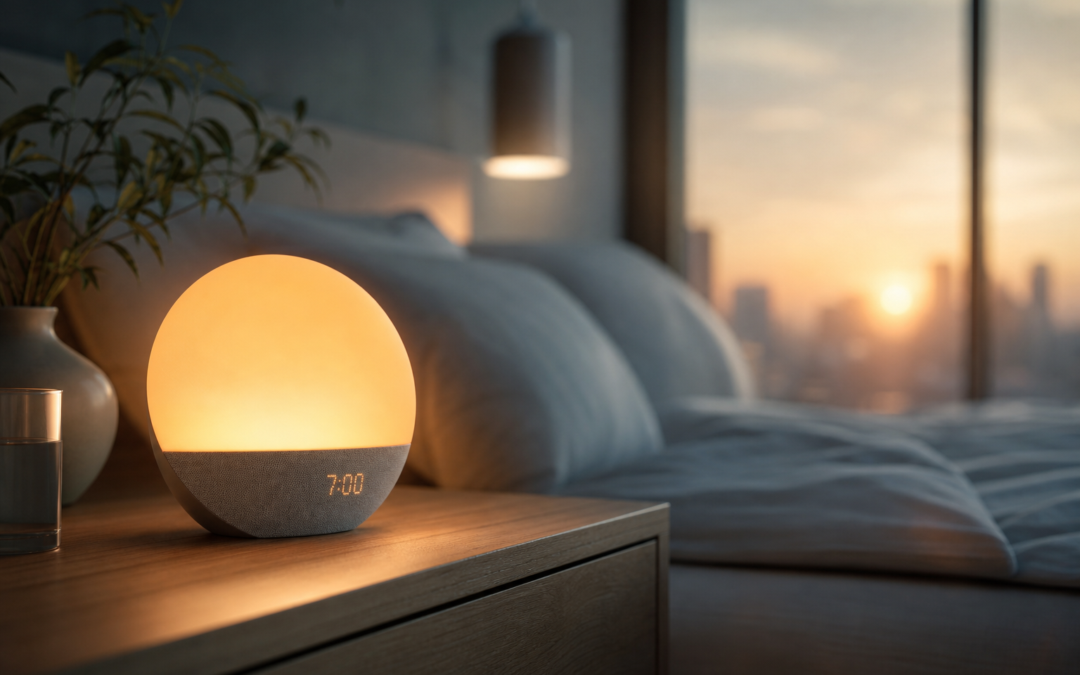
A sunrise alarm clock, sometimes called a wake-up light or dawn simulator, sits near your bed and gradually increases brightness before your chosen wake time. Many models start dim and warm, then become brighter over 20 to 60 minutes. Some also add gentle sound, white noise, sunset dimming, breathing exercises, or app-based routines.
The main appeal is simplicity. You set one device, place it where the light can reach your face indirectly, and let it run. You do not need to automate a full room or manage several connected bulbs.
Best fit for sunrise alarm clocks
A sunrise alarm clock is usually the better fit if:
- You want a dedicated bedside wakeup device.
- You do not want to depend on a phone automation every morning.
- Your bedroom has one primary sleep area and one wake time.
- You like having sound, light, and alarm controls in one unit.
- You rent or do not want to change bulbs, lamps, switches, or fixtures.
- You want a consistent routine that is easy to explain to a partner or guest.
A dawn-style alarm may also feel gentler than a sudden sound alarm because the light builds gradually. That does not mean it will wake every heavy sleeper on its own, so many people still keep a quiet backup sound alarm while testing it.
What a smart light bulb wakeup does
A smart light bulb wakeup uses connected bulbs or lamps to brighten on a schedule. Depending on the bulb and app, you may be able to set brightness, color temperature, timing, rooms, weekdays, weekends, voice controls, and multiple scenes.
This setup can be powerful because it lights the room itself rather than one bedside device. If your lamp placement is good, the whole bedroom can shift from dark to softly lit before you get up.
Best fit for smart light bulb wakeups
A smart bulb wakeup is usually the better fit if:
- You already use smart bulbs or a smart-home platform.
- You want several lamps to brighten together.
- You need different routines for weekdays, weekends, kids, or travel days.
- You want the same lights to handle evening dimming and morning brightening.
- You prefer room lighting over a single bedside light.
- You are comfortable troubleshooting apps, Wi-Fi, hubs, or automations.
The tradeoff is complexity. If the app updates, the Wi-Fi drops, or someone turns off the wall switch, your scheduled wakeup light may not run as expected.
Quick comparison: sunrise alarm clock vs smart light bulb
Choose a sunrise alarm clock if you want simple and reliable
A dedicated sunrise alarm clock wins on simplicity. It is usually designed around one job: wake you gradually with light. Controls are often on the device itself, which is useful if you do not want to pick up your phone before bed.
A bedside unit is also easier to move, test, and return if it does not fit your routine. You can try different brightness levels, sunrise lengths, and sound settings without rebuilding your bedroom lighting.
The downside is coverage. A small bedside sunrise alarm may not brighten the whole room. If it faces away from you, sits too low, or is blocked by bedding, the effect may be weaker. Placement matters.
Choose smart bulbs if you want whole-room control
Smart bulbs win on flexibility. You can put them in bedside lamps, overhead fixtures, or floor lamps and build routines that fit your room. You may be able to create a low, warm evening scene and a brighter morning scene using the same hardware.
They are especially useful for couples with different sides of the bed, larger bedrooms, or people who want the room to brighten before they walk in after a shower or workout.
The downside is dependency. Smart bulbs need power, working settings, and sometimes Wi-Fi or a hub. They can also be too bright if you use overhead lighting aggressively first thing in the morning. For a sleep-friendly routine, the goal is a gradual cue, not a stadium-light interrogation.
Which one is better for sleep?
Neither option is automatically “better for sleep” in every home. The better choice is the one you will use consistently, at the right time, without making evenings brighter than they need to be.
Light can shift alertness and circadian timing. AASM’s Sleep Education resource notes that bright light exposure helps set the internal clock and that light therapy should be used within proper limits for timing and intensity. For everyday wakeups, that means a gradual morning light routine may be helpful for some people, but stronger light therapy should be discussed with a clinician, especially if you have a circadian rhythm disorder, eye condition, bipolar disorder, or medication questions.
For most readers, the practical hierarchy is:
- Keep a steady wake time when possible.
- Get bright outdoor light in the morning when feasible.
- Keep evenings dimmer and reduce harsh light close to bedtime.
- Use a sunrise alarm or smart bulbs as a supportive cue, not a miracle switch.
If you are regularly unable to fall asleep, waking far too early, sleeping through alarms, dealing with severe daytime sleepiness, or worried about breathing pauses or loud snoring, talk with a qualified healthcare professional.
Bedroom setup tips for either option
Place the light where it can actually reach you
A sunrise alarm clock hidden behind books is mostly decorative. Place it where the light can reach your side of the bed indirectly. You should not need to stare into it. With smart bulbs, prioritize lamps that fill the room softly instead of relying only on an overhead fixture.
Start warmer and dimmer than you think
A good wake routine should feel gradual. Start with a lower brightness and longer ramp, then adjust. If you wake too early, the light may be too bright or starting too soon. If you sleep through it, you may need more brightness, better placement, sound backup, or a more consistent bedtime.
Keep the evening routine separate
Morning brightness is not permission to blast bright light at 11 p.m. If your device has sunset mode, use warmer and dimmer settings in the evening. If you use smart bulbs, create a separate evening scene that reduces brightness well before bed.
Keep a backup alarm while testing
For the first week, use a backup sound alarm. Once you know your light setup works, you can decide whether to keep the backup, lower the volume, or move it across the room.
Think about partners and kids
If you share a bedroom, your ideal wake light may be someone else’s rude awakening. Sunrise alarms work best when both people wake around the same time or when the light can be aimed carefully. Smart bulbs may be better for family routines because you can schedule different rooms separately.
Cost and feature differences
Basic sunrise alarm clocks can be inexpensive, while premium models add better light diffusion, app controls, sound libraries, sunset routines, buttons, and nicer design. Some devices also use subscriptions for extra audio content, so check what works without a paid plan before buying.
Smart bulbs can look cheaper at first if you only need one bulb. Costs rise if you need multiple bulbs, lamps, bridges, smart speakers, or compatible switches. The upside is that the same bulbs can support reading, relaxing, travel schedules, and general room lighting.
Before spending anything, write down what you actually need:
- One bedside wakeup or whole-room lighting?
- Physical buttons or app-only control?
- Sound alarm included or separate?
- Sunset dimming needed?
- Multiple schedules?
- Works without Wi-Fi?
- No subscription required for core features?
That checklist will cut through a lot of shiny product pages.
Common mistakes to avoid
Using wakeup lights while ignoring bedtime
A sunrise alarm cannot fully compensate for irregular sleep timing, late caffeine, bright late-night screens, or a chaotic wind-down routine. It is a support tool, not a reset button.
Making the room too bright too late
If you use smart bulbs, avoid setting bright, cool-white light as your default evening scene. NHLBI notes that bright artificial light late in the evening can disrupt melatonin release. Keep evenings softer.
Assuming more features means better sleep
More sounds, colors, routines, and app screens can become another thing to manage. If complexity keeps you from using the device, simpler is better.
Treating light devices like medical care
Bright light therapy can be clinically useful for certain circadian rhythm issues, but timing and intensity matter. If you suspect a circadian rhythm disorder, chronic insomnia, depression, bipolar disorder, or another health concern, get medical guidance instead of guessing.
Bottom line
Choose a sunrise alarm clock if you want the easiest, most contained way to try a gentler light-based wakeup. Choose smart light bulbs if you want flexible room-wide lighting and are comfortable with apps and automations.
For many people, the best routine is simple: dim evenings, consistent wake time, gradual morning light, and outdoor daylight when possible. The device is just the cue. The routine does the heavy lifting.
Related reading
- Best Bedroom Temperature for Sleep: Cool-Room Setup Guide
- White Noise vs Brown Noise vs Pink Noise for Sleep: Which Sound Is Best?
- Why Do I Wake Up at 3 AM Every Night?
Sources
- National Heart, Lung, and Blood Institute. “How Sleep Works: Your Sleep/Wake Cycle.” https://www.nhlbi.nih.gov/health/sleep/sleep-wake-cycle
- American Academy of Sleep Medicine Sleep Education. “Bright Light Therapy.” https://sleepeducation.org/patients/bright-light-therapy/
- Blume C, Garbazza C, Spitschan M. “Effects of light on human circadian rhythms, sleep and mood.” Somnologie (Berl). 2019;23(3):147–156. https://pmc.ncbi.nlm.nih.gov/articles/PMC6751071/
- Sleep Foundation. “Best Sunrise Alarm Clock.” https://www.sleepfoundation.org/best-alarm-clocks/best-sunrise-alarm-clock
Disclosure and health note
Fast Sleep Fix may earn a commission if affiliate links are added to this article in the future. This version was published without active affiliate links.
This article is for informational purposes only and is not medical advice. Light-based wakeup devices may help some people build a steadier routine, but results vary. If you have persistent insomnia, suspected sleep apnea, breathing pauses, severe daytime sleepiness, depression, bipolar disorder, eye conditions, medication questions, drowsy driving, or other concerning symptoms, talk with a qualified healthcare professional.