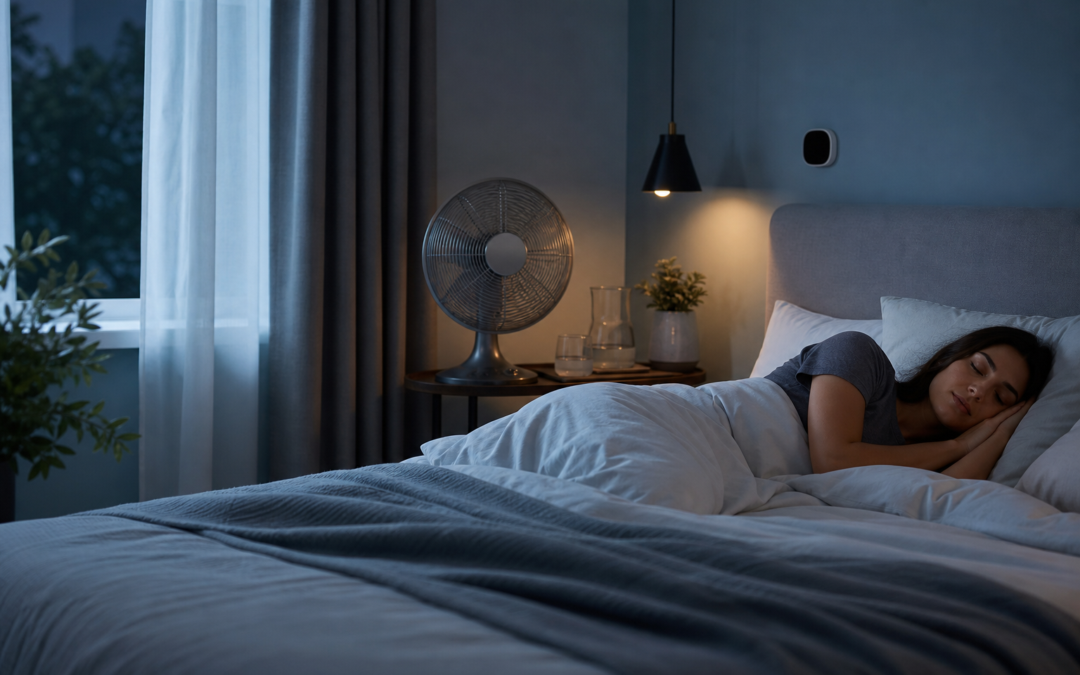
Best Bedroom Temperature for Sleep: Cool-Room Setup Guide
Quick answer: what is the best bedroom temperature for sleep?
For many adults, the best bedroom temperature for sleep is often in the cool-but-comfortable range of about 60–67°F. That does not mean everyone needs to turn the bedroom into a walk-in freezer. It means your room, bedding, pajamas, and humidity should work together so your body can cool down naturally without waking you up sweating or shivering.
A cool room may help because body temperature and sleep are connected. Research reviews note that sleep onset often happens as core body temperature declines, while comfortable skin warmth from bedding can support that cooling process. Translation: your bedroom should feel like a calm cave, not a sauna with pillows.
If you want the simplest starting point, try this:
- Set the thermostat around 65°F for three nights.
- Use breathable bedding instead of piling on heavy layers.
- Keep the room dark, quiet, and cool.
- Adjust in small steps if you wake up hot, cold, or restless.
That is the clean setup. Now let’s tune the car.
Why temperature matters for sleep
Your body does not enter sleep like someone flipping a light switch. It shifts through a whole pre-sleep sequence: alertness drops, light exposure matters, hormones change, and body temperature begins to fall.
Temperature is part of that process. When your sleep environment is too warm, it may make it harder for your body to release heat. When it is too cold, you may tense up, curl tightly, or wake because you are uncomfortable. Neither is ideal. Like running slick tires in the rain, technically possible, mostly stupid.
The CDC’s basic sleep-habit guidance includes keeping the bedroom quiet, relaxing, and cool. Cleveland Clinic’s sleep guidance commonly points adults toward 60–67°F as a useful range. A scientific review in Frontiers in Neuroscience also highlights how sleep and thermoregulation are linked, including the role of skin warming, bedding microclimate, and declining core temperature around sleep onset.
The practical takeaway is not “cold equals better.” It is cool room + comfortable bedding + stable routine.
The best temperature range is a starting line, not a law
The 60–67°F range is useful, but your ideal number may vary based on:
- Bedding weight
- Pajama fabric
- Mattress material
- Humidity
- Season
- Whether you share the bed
- Age and health status
- Whether you run hot or cold at night
Some people sleep best at 64°F with a medium blanket. Others need 68°F and a lighter sheet. The goal is not to obey a number. The goal is to wake up less often because temperature stopped picking fights with your nervous system.
A simple three-night test
Try this mini-test before buying anything:
- Night 1: Set the room to your normal temperature. Write down whether you woke hot, cold, or comfortable.
- Night 2: Lower the temperature by 2°F if you woke hot, or raise it by 2°F if you woke cold.
- Night 3: Keep the better setting and change only one bedding variable, such as swapping a heavy comforter for a lighter blanket.
Track how long it takes to fall asleep, how often you wake up, and how you feel in the morning. Do not obsess over sleep tracker scores here. If the room feels better and you wake less, that is data. Beautiful, boring data.
Signs your bedroom is too warm
Your room may be too warm if you often:
- Wake up sweaty or sticky
- Kick off blankets, then get cold later
- Feel restless in the first half of the night
- Wake repeatedly without an obvious reason
- Feel like your pillow or mattress traps heat
- Sleep better in hotels, colder rooms, or with a fan
Heat can be especially annoying because it stacks with other sleep disruptors: stress, alcohol, late meals, caffeine timing, heavy bedding, and a mattress that holds warmth.
If you wake up sweating at night once in a while, bedroom temperature may be part of it. But repeated or intense night sweats can have many causes. If sweating is persistent, severe, new, or paired with symptoms like fever, weight changes, pain, medication changes, or breathing problems, talk with a clinician.
Signs your bedroom is too cold
A cooler room can support sleep for many people, but colder is not automatically better. Your room may be too cold if you:
- Wake with cold hands or feet
- Tense your shoulders or curl tightly all night
- Need multiple heavy layers to feel comfortable
- Wake early because the room temperature drops
- Feel chilled when getting out of bed
If the room is below your comfort zone, your body may work harder to stay warm. That can make sleep feel lighter or more interrupted. The fix is usually not blasting the heat. Try smarter layering first.
Build the ideal cool-room sleep setup
A better sleep-temperature setup has four parts: room temperature, air movement, bedding, and personal cooling. Handle them in that order. Otherwise you end up buying gadgets before solving the obvious problem. That approach usually wastes time and money. Start with the basics first.
1. Set the thermostat before bedtime
If possible, lower the thermostat 30–60 minutes before bed. This gives the room time to cool before you are lying there negotiating with the ceiling.
A good starting target:
- Adults: try 60–67°F, then adjust for comfort.
- Older adults or people who feel cold easily: start toward the warmer end and adjust slowly.
- Babies and toddlers: follow pediatric-safe sleep guidance from a qualified source; do not assume adult temperature ranges apply.
If you cannot control the thermostat, use the next steps: airflow, bedding, and heat reduction.
2. Add gentle airflow
A fan may help some people sleep cooler by moving air across the skin and reducing that stale-room feeling. It can also provide steady background noise, which some people find helpful.
Try:
- Ceiling fan on low
- Small bedside fan aimed near, not directly at, your face
- Window airflow if outdoor temperature and air quality are reasonable
- Door cracked open if the bedroom traps heat
Avoid turning the bed into a wind tunnel. The point is comfort, not maximum airflow.
3. Use breathable bedding
Bedding can make or break your sleep temperature. A room can be perfectly cool and still feel hot if your mattress, sheets, or comforter trap heat.
Look for bedding that supports airflow and moisture control. Some people prefer cotton, linen, bamboo-derived fabrics, or performance fabrics. Results vary by person, weave, weight, and laundry care.
A practical bedding stack for hot sleepers:
- Breathable fitted sheet
- Light blanket or quilt
- Optional extra layer at the foot of the bed
- Pillowcase that does not feel warm after 10 minutes
If you share a bed, consider separate blankets. This is not a relationship failure. It is sleep diplomacy.
4. Rethink pajamas
Heavy pajamas can override a cooler bedroom. If you wake hot, try lighter sleepwear or breathable fabrics. If you wake cold, use socks or a light layer rather than raising the whole room temperature dramatically.
Small changes can work better than big ones:
- Swap fleece for cotton or lightweight fabric.
- Try socks if cold feet keep you awake.
- Avoid tight waistbands or fabrics that trap sweat.
5. Control humidity
Temperature is only half the story. A 67°F room can still feel swampy if humidity is high. High humidity may make it harder for sweat to evaporate, leaving you feeling warmer.
A comfortable indoor humidity range is often around 30–50%, though needs vary by climate, building, and health factors. If your room feels damp, consider ventilation or a dehumidifier. If it feels painfully dry, especially in winter, a humidifier may help comfort — but keep it clean to avoid mold or irritants.
6. Reduce heat sources
Bedroom heat creeps in from obvious and not-so-obvious places:
- Late sun through windows
- Electronics and chargers
- Heavy blackout curtains trapping daytime heat
- Pets in the bed
- Memory foam mattresses
- Partner body heat
- Hot showers immediately before bed
Try closing blinds during hot afternoons, opening the room earlier in the evening if the outdoor air is cooler, and moving unnecessary electronics away from the bed.
What if you sleep hot even in a cool room?
If your room is already cool but you still wake hot, look at the layers closest to your body.
Mattress heat retention
Some foam mattresses can feel warm because they contour closely and reduce airflow around the body. That does not mean foam is bad. It means hot sleepers may need to pay attention to materials, covers, and mattress protectors.
Potential fixes:
- Use a breathable mattress protector.
- Try lighter sheets before replacing the mattress.
- Avoid waterproof protectors that feel plasticky unless medically needed.
- Consider a cooling topper only after testing bedding basics.
Pillow heat
A pillow that traps heat can wake you even if the room temperature is fine. If you keep flipping the pillow to find the cold side, that is a clue.
Potential fixes:
- Breathable pillowcase
- Pillow with better airflow
- Lower-loft pillow if your neck position is also off
Internal link opportunity: point readers to FSF’s pillow guides here.
Alcohol and late meals
Alcohol may make some people feel sleepy at first, but it can fragment sleep later. Heavy late meals can also make some sleepers feel warmer or more restless. Keep the advice simple: if you wake hot at 2–4 a.m., test lighter evenings for a week and see if it helps.
No moral lecture. Just telemetry.
Cool-room setup for couples
Couples often have different temperature needs. One person wants the room cold enough to store salmon. The other wants three blankets and a written apology.
Try these fixes before turning bedtime into a thermostat war:
- Use separate blankets with different warmth levels.
- Put the hotter sleeper closer to airflow.
- Use a fan on one side of the bed.
- Choose breathable sheets that work for both people.
- Add socks or a throw blanket for the colder sleeper.
- Avoid one giant heavy comforter if one person overheats.
The goal is shared sleep, not identical sleep gear.
Cool-room setup for shift workers and daytime sleepers
Daytime sleep makes temperature harder because sunlight warms the room and your body clock may be pushing wakefulness. Shift workers may need a more deliberate setup:
- Cool the room before the sleep window starts.
- Use blackout curtains or shades.
- Add a fan for airflow and noise masking.
- Keep bedding light enough for daytime heat.
- Protect the sleep window from household activity.
Internal link opportunity: connect this section to FSF’s shift work guide.
Should you take a warm shower or bath before bed?
A warm shower or bath before bed may help some people relax and may support the body’s cooling process afterward. The key is timing. Doing it immediately before bed can leave some people feeling too warm, while doing it earlier may feel better.
Try a warm shower 60–90 minutes before bed and see how your body responds. Keep the claim soft: it may help some people, but it is not a guaranteed sleep switch.
A practical cool-room checklist
Use this as the “do this tonight” version:
- [ ] Set bedroom temperature near 65°F or your best cool-comfortable range.
- [ ] Lower thermostat 30–60 minutes before bed if possible.
- [ ] Use breathable sheets and a lighter blanket.
- [ ] Keep an extra layer nearby instead of overheating the whole bed.
- [ ] Add gentle airflow.
- [ ] Block late-day heat from windows.
- [ ] Keep the bedroom dark, quiet, and calm.
- [ ] Track hot/cold wakeups for three nights.
- [ ] Talk with a clinician if sleep problems or night sweats persist.
When bedroom temperature is not the whole problem
Temperature tweaks can support better sleep, but they are not a cure-all. If you regularly struggle to fall asleep, wake for long periods, snore loudly, gasp, stop breathing, wake with headaches, feel severely sleepy during the day, or rely heavily on sleep aids, it is time to bring in a healthcare professional.
Also talk with a clinician if night sweats are persistent, severe, or new; if pain wakes you; or if you have medication questions. A cooler room may make sleep more comfortable, but it should not be used to ignore symptoms that need proper evaluation.
Bottom line
The best bedroom temperature for sleep is usually cool, comfortable, and consistent. For many adults, that means starting around 60–67°F, then adjusting based on bedding, humidity, pajamas, and whether you wake hot or cold.
Do not chase a perfect number. Build a setup that helps your body cool down naturally, keeps your bedding breathable, and reduces avoidable wakeups. That is the win: fewer overnight wakeups and more actual rest.
- CDC — “About Sleep” — notes that healthy sleep habits include keeping the bedroom quiet, relaxing, and cool, and recommends talking with a healthcare provider for regular sleep problems.
https://www.cdc.gov/sleep/about/index.html
- Cleveland Clinic — “What’s the Best Temperature for Sleep?” — gives adult bedroom temperature guidance around 60–67°F and explains why rooms that are too hot or cold may disrupt sleep.
https://health.clevelandclinic.org/what-is-the-ideal-sleeping-temperature-for-my-bedroom
- Harding EC, Franks NP, Wisden W. “The Temperature Dependence of Sleep.” Frontiers in Neuroscience. 2019;13:336. PMCID: PMC6491889. Discusses links between thermoregulation, core temperature decline, skin warming, bedding microclimate, and sleep.
https://pmc.ncbi.nlm.nih.gov/articles/PMC6491889/
Disclosure
Fast Sleep Fix may earn a commission if affiliate links are added to this article in the future. This version was published without active affiliate links.