
Last updated: February 2026
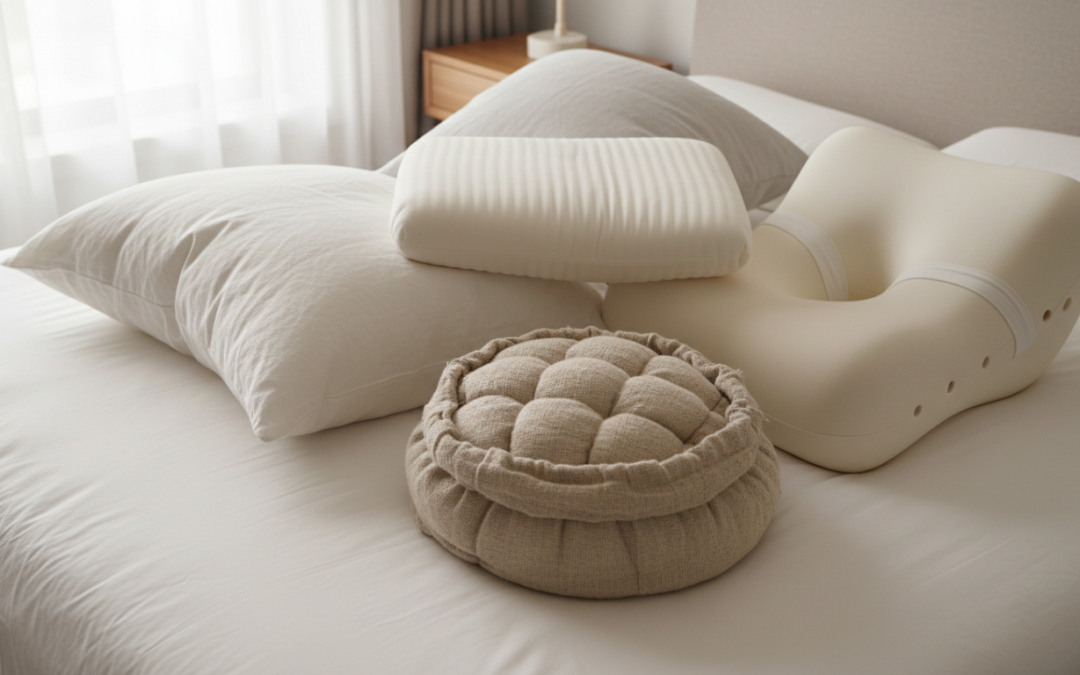
Your pillow is one of the few pieces of sleep gear that touches your head and neck for 8 hours a night. A wrong pillow causes neck stiffness, headaches, and restless sleep. The right pillow cradles your head, keeps your spine aligned, and makes it easy to drift off. But “right” depends entirely on your sleep position, shoulder width, and personal preference. This guide helps you match your body and position to the pillow that will actually help.
Understanding Pillow Firmness and Loft
Loft: How high the pillow sits. Measured from the base to the top when the pillow is compressed under your head’s weight.
- Low loft (2–4 inches): Thin, almost flat. Best for stomach sleepers, low-loft side sleepers, or people who prefer minimal elevation.
- Medium loft (4–6 inches): Middle ground. Suits most back and side sleepers, most versatile.
- High loft (6–8+ inches): Tall, fluffy pillows. Best for wide-shouldered side sleepers or people who like maximum elevation.
Firmness: How much resistance and support the pillow provides when compressed.
- Soft: Minimal support, lots of sink-in. Comfortable for side sleepers and people who like their head deeply cradled.
- Medium: Balanced support and comfort. Good for most sleepers; works across multiple positions.
- Firm: Lots of resistance; minimal sinking. Best for back sleepers who want support under the head and neck, or stomach sleepers who don’t want too much elevation.
Pillow Materials: How They Feel and Perform
Memory Foam Pillows
Feel: Contoured and cradling. Conforms to head and neck shape, providing targeted support.
Pros: Excellent neck support, durable (5–7 years typical), doesn’t require fluffing.
Cons: Can trap heat; can feel too firm initially (takes a few nights to break in); may develop an indent over time.
Best for: Back and side sleepers with neck issues; people who want firm, supportive pillows.
Heat consideration: Choose gel-infused memory foam if you sleep hot.
Down and Down Alternative Pillows
Feel: Soft, luxurious, easily moldable. Adjusts to your head shape without firm support.
Pros: Breathable, lightweight, washable (usually), luxurious feel.
Cons: Requires fluffing; less supportive if you have neck pain; loses loft over 2–3 years; dust mite heaven if allergic.
Best for: Side sleepers who like soft pillows; people without neck issues; hot sleepers who want breathability.
Allergies: Down alternative is better for dust mite allergies but still not hypoallergenic.
Latex Pillows
Feel: Bouncy, responsive, contoured without being sticky. Natural latex is springy.
Pros: Naturally hypoallergenic, durable (10+ years), excellent support, breathable, cooler than memory foam.
Cons: More expensive; heavier than down; some people find them too firm initially; less moldable than memory foam.
Best for: Hot sleepers, people with allergies, back and side sleepers, long-term investment.
Buckwheat Hull Pillows
Feel: Firm and moldable. Each hull shifts independently, creating a custom shape. Distinctly different from conventional pillows.
Pros: Excellent airflow, fully customizable (remove hulls to adjust), very durable, naturally hypoallergenic.
Cons: Firm, takes significant adjustment (people used to soft pillows may find it jarring), can feel noisy when you move, not ideal for very hot environments (can absorb humidity).
Best for: Hot sleepers, side sleepers with high loft needs, people with neck pain who want firm support, long-term users.
Learning curve: Give yourself 1–2 weeks to adjust. It feels very different initially.
Pillow Picks by Sleep Position
Back Sleepers
What you need: Medium loft (4–6 inches), medium-to-firm support. Your head and neck should form a straight line with your spine. Too high, and your head flexes forward; too low, and your neck hyperextends backward.
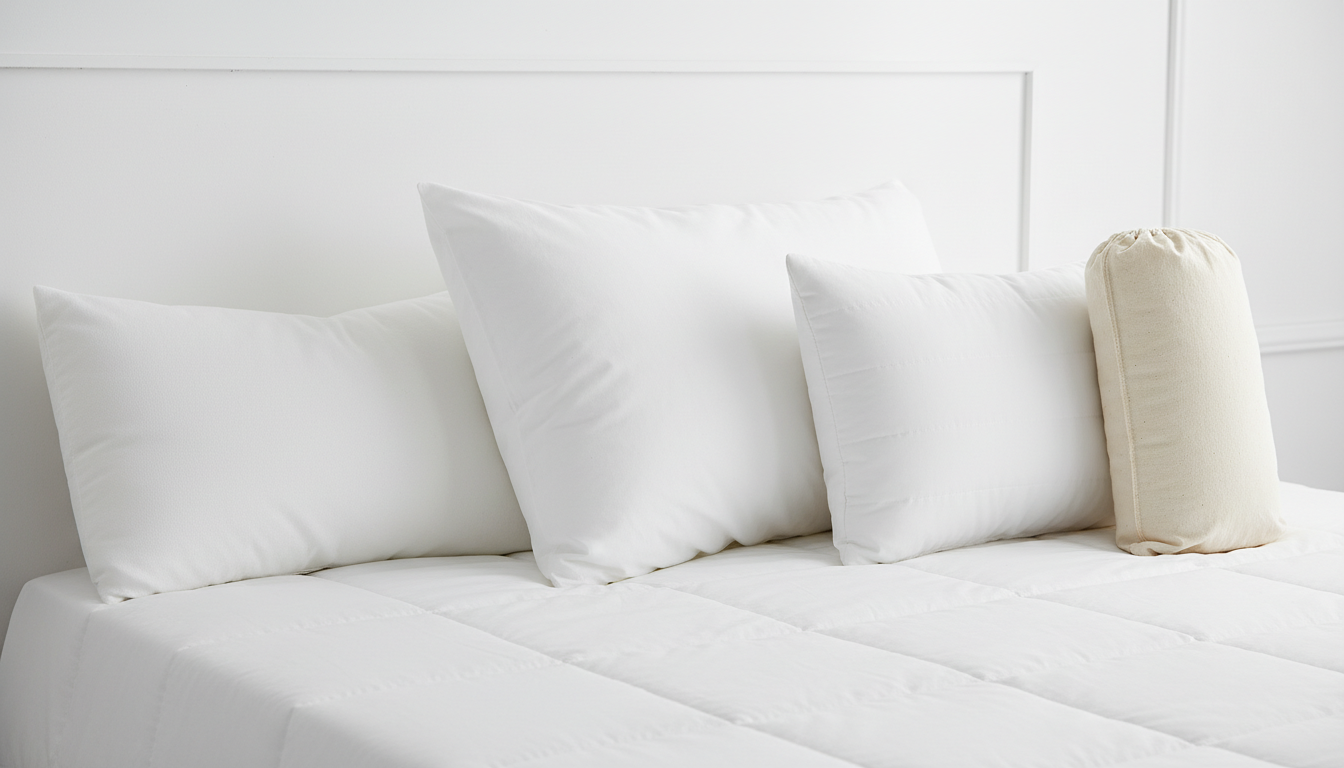
Test: Lie on your back. Your head should feel supported without your chin tucking forward.
Top picks:
- Saatva Latex Pillow: Medium loft, responsive latex, cool-sleeping. ~$150. Excellent for back sleepers who want support without sinking.
- Coop Home Goods Eden: Adjustable fill, medium loft, gel-infused memory foam, cool-sleeping. ~$80. Excellent for back sleepers who want customizable support.
- Budget: Nectar Memory Foam Pillow (~$80): Decent support, medium-firm, good value.
Side Sleepers
What you need: Higher loft (5–7 inches), medium-to-soft support. Your head rests on the pillow, and your neck aligns with your spine without dropping or extending. The pillow should fill the gap between your shoulder and head.
Shoulder width matters: Broader shoulders need higher loft; narrower shoulders do better with medium loft.
Test: Lie on your side. Draw an imaginary line from your ear to your shoulder. Your neck and head should form a straight line with your spine, not dropping or tilting.
Top picks:
- Coop Home Goods Original: Adjustable shredded memory foam, high loft, ~$70-80. Excellent if you’re a pure side sleeper.
- Purple Harmony Pillow: Gel-infused hyper-elastic polymer, high loft, cooler than memory foam, excellent support. ~$150. For hot side sleepers.
- Brooklinen Luxeloft: Down alternative, high loft, soft but supportive. ~$165. For side sleepers who like luxury feel without the heat of down.
- Budget: Casper Original (~$75): Decent loft, medium feel, works okay for side sleepers on a budget.
Stomach Sleepers
What you need: Low loft (2–4 inches), medium-to-firm support. Stomach sleeping naturally flexes your neck backward (not ideal), so a thin pillow minimizes the strain. Many sleep specialists recommend transitioning away from stomach sleeping, but if that’s your position, a low-loft pillow is essential.
Test: Lying on your stomach, your neck should feel neutral, not craned backward. Ideally, your forehead rests on the pillow, not your chin.
Top picks:
- Silk & Snow Pillow (low-loft option): Hybrid foam and springs, very thin, supportive without elevation. ~$120.
- Pancake Pillow by Gravity: Stackable thin layers, adjustable to ultra-low loft. ~$70. Best option for stomach sleepers who want customizable thinness. Best option for stomach sleepers who want neck safety.
- Budget: Thin down alternative pillow: A standard down-filled pillow from Target or Amazon can work (~$30–50), though it won’t be as durable.
Note: Stomach sleeping compresses your airways and is linked to increased sleep apnea risk. If you’re a chronic stomach sleeper with sleep issues, ask a sleep specialist about transitioning to side sleeping.
Combo Sleepers (Multiple Positions)
What you need: Medium loft (4–6 inches), medium firmness. A versatile pillow that works reasonably well for back, side, and occasional stomach sleep.
Top picks:
- Casper Original Pillow: Medium loft, medium feel, works for multiple positions. ~$75–125. Not perfect for any single position but good for combo sleepers.
- Helix Hybrid Pillow: Foam + coil spring, medium loft and feel, works across positions. ~$150. More supportive than pure foam.
- Budget: Brooklinen Standard (~$95): Medium loft, down alternative, breathable, decent for mixed sleeping.
Quick Pillow Selector Quiz
Do you sleep mostly on your side? Yes = Higher loft (5–7 inches), medium-soft, consider latex or high-loft down alternative.
Do you have neck pain or upper back tension? Yes = Memory foam or latex (firmer options), medium loft for back sleeping; higher loft for side sleeping.
Do you sleep hot? Yes = Avoid memory foam; choose latex, buckwheat, or gel-infused. Latex is best.
Do you sleep on your stomach? Yes = Low loft (2–4 inches), consider transitioning to side or back sleeping with professional guidance.
Do you move between positions? Yes = Medium loft (4–6 inches), medium firmness. Prioritize breathability if you sleep hot.
Do you have allergies? Yes = Latex, buckwheat, or synthetic hypoallergenic; avoid down and natural latex if you have latex allergies.
Pillow Lifespan and Replacement
Memory foam pillows: 5–7 years before losing support and developing indents.
Down and down alternative: 2–3 years before flattening; requires regular fluffing to extend life.
Latex pillows: 10+ years; minimal degradation.
Buckwheat pillows: 10+ years; hulls may compress slightly but core material is durable.
If your pillow is more than 3–5 years old and you wake with neck stiffness, replacement is likely overdue.
Bottom Line
Your sleep position determines loft and firmness. Back sleepers: medium loft, medium-firm support. Side sleepers: higher loft (5–7 inches), medium-soft, especially if broad-shouldered. Stomach sleepers: low loft, firm, and consider transitioning positions for cervical health. If you sleep hot, prioritize latex, buckwheat, or gel-infused options. Test any new pillow for at least 1–2 weeks before deciding; your neck needs time to adjust. And remember: a $200 pillow with the wrong loft for your position is worse than a $50 pillow that fits your needs perfectly.