
Last updated: February 2026
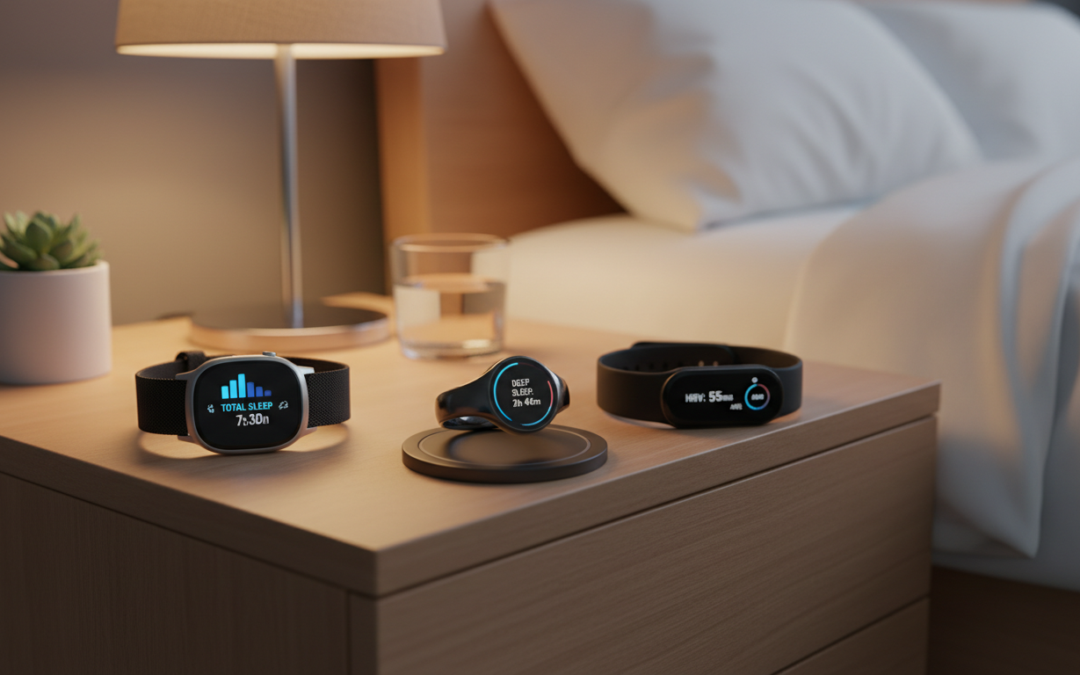
Sleep trackers have become incredibly popular, and for good reason — they promise to decode the mystery of what happens while you’re unconscious for eight hours. But there’s a wide gap between what these devices claim to measure and what they actually measure well. This guide compares the major options and helps you focus on the metrics that matter.
What Sleep Trackers Can and Can’t Measure
Most consumer sleep trackers use accelerometers (motion) and optical heart rate sensors to estimate sleep. Some add skin temperature and blood oxygen. Here’s the honest breakdown:
Measured well: Total sleep duration, time in bed, wake time, bedtime consistency, resting heart rate trends, movement during sleep.
Measured poorly: Individual sleep stages (light, deep, REM). Studies consistently show that consumer wearables agree with clinical polysomnography on sleep stages only about 60–70% of the time. Don’t obsess over your “deep sleep percentage.”
Not measured at all: Sleep quality as you subjectively experience it, sleep disorders like apnea (some devices flag indicators but can’t diagnose), or the restorative value of your sleep.
The Metrics That Actually Matter
Instead of chasing perfect sleep stage data, focus on these actionable metrics:
Bedtime and wake time consistency: The most impactful sleep metric. If your tracker shows you going to bed at 10 PM on Tuesday and 1 AM on Friday, that’s your biggest opportunity.
Total sleep time: Are you actually getting 7–9 hours, or just spending that time in bed?
Sleep latency: How long it takes you to fall asleep. Under 20 minutes is typical. Over 30 minutes consistently suggests a problem worth investigating.
Resting heart rate trends: A gradual decline in resting heart rate over weeks often correlates with improving fitness and recovery. Spikes can indicate stress, illness, or alcohol.
Oura Ring (Gen 3)
Form factor: Titanium ring, lightweight, no screen.
Best for: People who want 24/7 tracking without wearing a watch to bed. Minimalists.
Strengths: Comfortable for sleep, excellent temperature tracking, good battery life (4–7 days), readiness score is useful.
Weaknesses: Requires subscription ($6/month) for full features, no real-time heart rate during workouts, sleep stage accuracy is similar to competitors.
Privacy: Data stored in Oura cloud. Can export your data.
Apple Watch (Series 10 / Ultra 2)
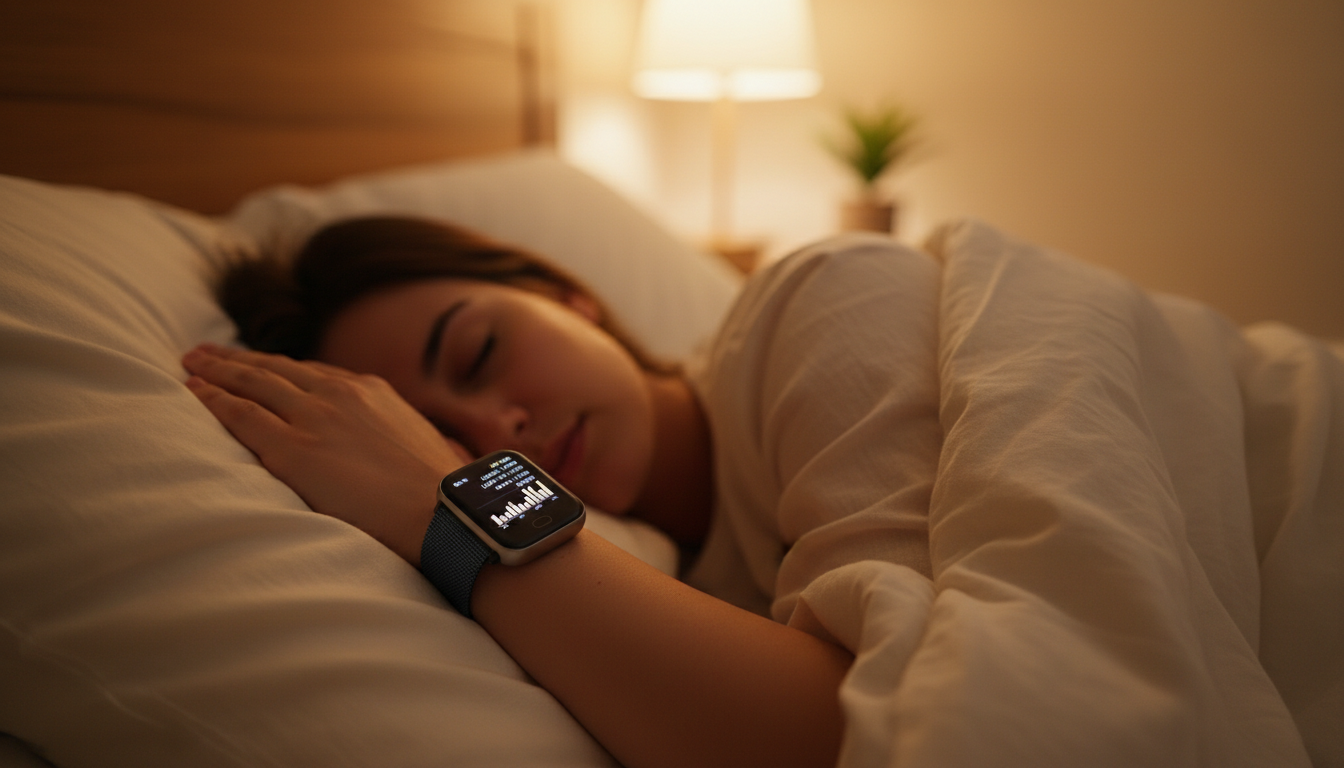
Form factor: Smartwatch, requires nightly charging (or near-daily).
Best for: People already in the Apple ecosystem who want sleep tracking as one of many features.
Strengths: Blood oxygen monitoring, fall detection, wide app ecosystem, no subscription for core features.
Weaknesses: Battery life means you may need to charge at an inconvenient time, bulky for side sleepers, sleep tracking is less detailed than dedicated devices.
Privacy: Health data stays on-device by default (good).
Whoop 4.0
Form factor: Screen-less strap (wrist, bicep, or clothing clip).
Best for: Athletes and fitness enthusiasts focused on recovery metrics.
Strengths: Strain and recovery scores, respiratory rate tracking, journal feature for correlating habits with sleep.
Weaknesses: Subscription-only model ($30/month), no display, recovery score can create anxiety, sleep stage claims are no more accurate than competitors.
Privacy: Cloud-based. Review their data policy carefully.
Budget Options
Fitbit (Charge 6 / Inspire 3): Solid sleep tracking at a lower price point. Good app, decent battery life. Premium subscription unlocks detailed insights but isn’t required for basics.
Amazfit Band 7: Very affordable, surprisingly decent sleep tracking for the price. Battery lasts weeks. App is less polished than Fitbit or Oura.
No tracker at all: A simple sleep diary (pen and paper or a free app) tracking bedtime, wake time, and how you feel in the morning gives you 80% of the actionable data a $300 device provides. Seriously.
The Orthosomnia Problem
There’s a real phenomenon called “orthosomnia” — anxiety about achieving perfect sleep scores. If checking your tracker first thing in the morning makes you feel worse about your sleep, consider ditching it or checking scores less frequently. The tracker should serve you, not the other way around.
The Bottom Line
Sleep trackers are useful for spotting patterns and building consistency. They’re not useful for diagnosing sleep disorders or providing accurate sleep stage data. Choose based on form factor and ecosystem preference, focus on consistency metrics, and don’t let the data stress you out.
For more on building consistent sleep habits without gadgets, see The Fast Sleep Fix Method. For app-based tools, check out our sleep app roundup.