
Last updated: February 2026
Shift work is one of the hardest sleep challenges because you’re fighting your biology. Your circadian rhythm wants you awake during the day and asleep at night — and no amount of willpower changes that. But with the right strategies, products, and routines, you can dramatically improve the quality and quantity of sleep you get during the day.
The Core Challenge
Night shift workers face three simultaneous problems: trying to sleep when their body wants to be awake, trying to stay alert when their body wants to sleep, and managing the social and family demands of a daytime world. No single fix addresses all three, which is why shift work sleep requires a system, not a hack.
Blackout Strategies: Make Your Bedroom Dark at Noon
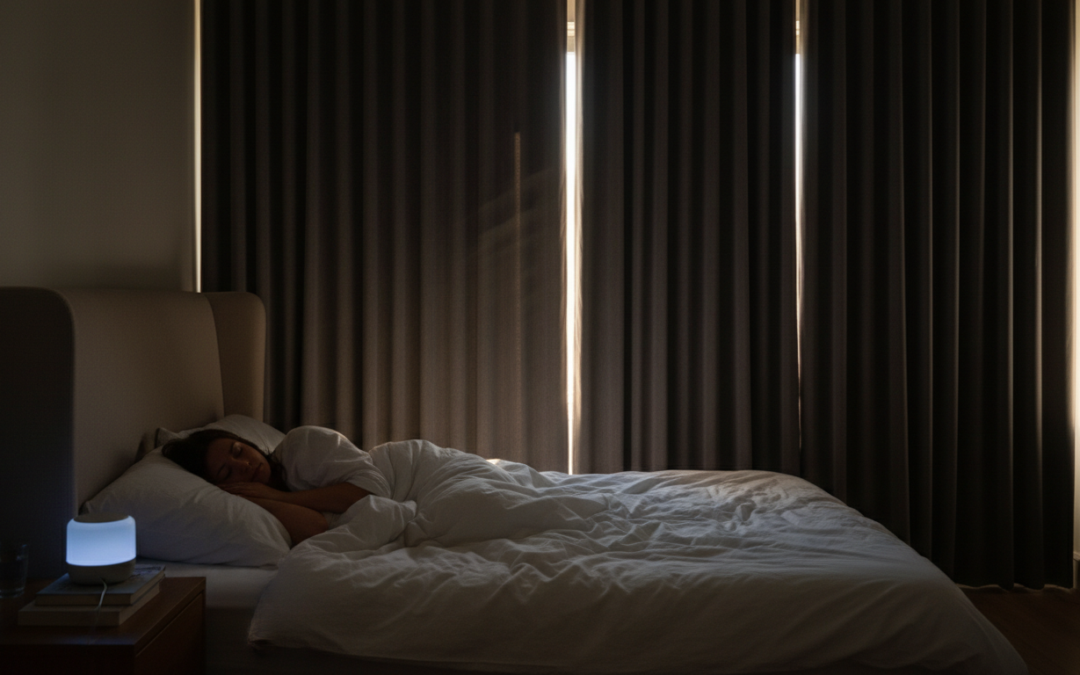
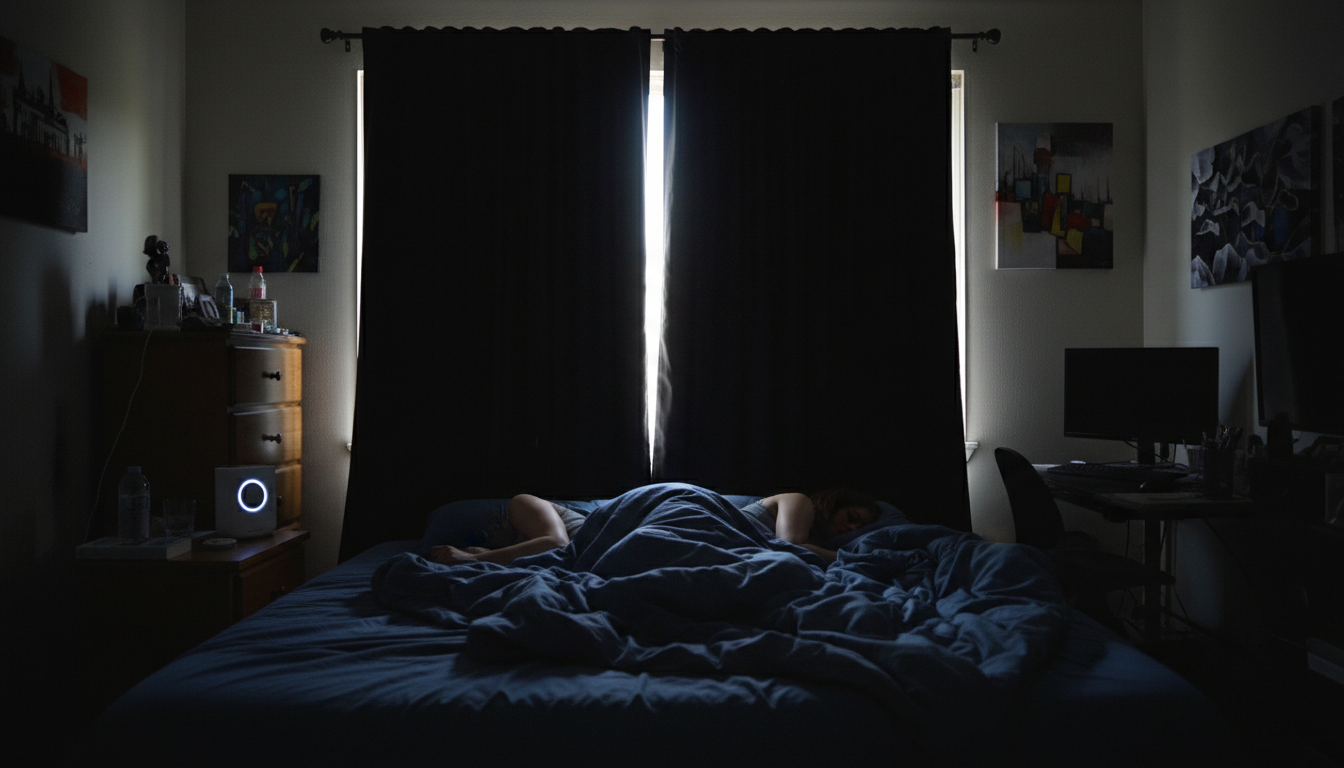
Blackout curtains are non-negotiable. Regular curtains are not enough — even a small amount of light can disrupt daytime sleep. Look for curtains that mount flush to the wall or use a track system that eliminates light gaps at the edges.
Sleep mask as backup. Even with blackout curtains, light can leak around edges and under doors. A quality sleep mask provides an extra layer of protection. See our sleep mask picks.
Cover indicator lights. Blue and green LEDs on electronics are surprisingly disruptive. Use electrical tape or unplug devices in the bedroom.
Noise Control: Silence the Daytime World
The world is loud during the day — traffic, construction, deliveries, neighbors, lawn mowers. You need to create a sound barrier.
White noise machine: The foundation of daytime sleep sound control. Place it between you and the primary noise source (window or door). See our white noise machine guide.
Earplugs: Layer earplugs on top of white noise for maximum isolation. Foam earplugs with a high NRR (noise reduction rating) work well. See our earplug recommendations.
Communicate with household members. Let family, roommates, and neighbors know your sleep schedule. A simple sign on the door (“Day sleeper — please don’t knock”) and silenced doorbells can prevent unnecessary wake-ups.
Consistent Anchors: Pick a Schedule and Protect It
The biggest mistake shift workers make is flipping their schedule on days off — sleeping at night on weekends and during the day on work nights. This keeps your body in a constant state of jet lag.
If possible, keep a consistent sleep window even on days off. If you work nights and sleep from 8 AM to 4 PM, try to maintain a similar window on your days off, even if you shift it slightly.
If you rotate shifts, you have less control. In that case, prioritize the transition days: use light exposure and melatonin timing to shift your rhythm as quickly as possible.
Caffeine Timing for Shift Workers
Caffeine is a useful tool for shift workers, but timing matters more than amount:
Use caffeine at the start of your shift to boost alertness when you need it most.
Stop caffeine at least 6 hours before your target sleep time. If you sleep at 8 AM, your last coffee should be before 2 AM.
Avoid using caffeine to power through the last hours of a shift. Late-shift caffeine is the number one saboteur of daytime sleep.
Light Management
During your shift: Bright light (especially in the first half of your shift) helps keep you alert and can help anchor your circadian rhythm to your work schedule.
After your shift: Wear dark sunglasses on the drive home, even on cloudy days. Morning sunlight is the strongest circadian signal, and you want to avoid it when you’re heading to bed.
Before your shift: If you’re waking up in the evening, get some bright light exposure to signal “morning” to your brain.
Product Picks for Shift Workers
- Blackout curtains — The single most important purchase. Get ones that eliminate edge gaps.
- Sleep mask — Backup light blocking and useful for naps. See our top picks.
- White noise machine — Essential for daytime noise. See our recommendations.
- Cooling bedding — Daytime temperatures are higher, making cooling sheets or a fan important. See our cooling products guide.
- Dark sunglasses — For the commute home. Blue-blocking amber lenses work best.
- Light therapy lamp — For the start of your “day” (evening). Helps anchor your rhythm.
Family and Social Life
This is the part most sleep guides skip, but it matters. Shift work doesn’t just affect your sleep — it affects your relationships. A few things that help:
Communicate your schedule clearly. Share your sleep times with family so they know when not to disturb you and when you’re available.
Protect one shared meal or activity. Even if your schedule is flipped, try to have one consistent touchpoint with family — breakfast before their day, dinner before your shift, or a weekend activity.
Don’t feel guilty about sleeping. Daytime sleep is not laziness — it’s a biological necessity for your schedule. Family members may need reminding of this.
Safety Notes
Shift work is associated with increased risk for several health conditions. If you experience any of the following, talk to your doctor:
- Excessive sleepiness that doesn’t improve with better sleep habits
- Difficulty staying awake during your shift (especially if you drive or operate machinery)
- Persistent mood changes, irritability, or depression
- Digestive problems that correlate with your shift schedule
Shift Work Sleep Disorder is a recognized condition with treatment options. Don’t try to tough it out if your sleep and health are significantly affected.
The Bottom Line
Shift work sleep will never be as easy as nighttime sleep, but it can be dramatically better than what most shift workers settle for. Invest in blackout darkness, consistent white noise, a fixed schedule, smart caffeine timing, and light management. And don’t hesitate to seek professional help if the basics aren’t enough.
For the foundational sleep system that supports shift workers too, see The Fast Sleep Fix Method. For product details, browse our 2026 product roundup.