
Last updated: February 2026
One of the most overlooked factors in sleep quality is temperature. Your core body temperature needs to drop 2–3 degrees Fahrenheit for deep sleep to happen. If your bed is trapping heat, you’ll wake frequently, sweat through the night, and struggle to enter REM sleep. Cooling your sleep environment is one of the fastest, most effective sleep improvements you can make—and you don’t need to spend thousands on smart mattresses. Strategic bedding, toppers, and positioning can transform your sleep.
Temperature Basics: Why Cooling Matters
Your body naturally cools itself to initiate sleep. A bedroom around 60–67°F (15–19°C) is ideal, but your microclimate—the space under your covers—is what truly matters. If your bedding traps body heat, your skin temperature rises, and your brain detects this as “time to wake.”
Key factors in your sleep microclimate:
- Airflow: Stagnant air under covers traps heat. Breathable fabrics allow heat and moisture to escape.
- Fabric material: Natural fibers (cotton, linen) breathe better than synthetics or dense polyester.
- Mattress heat retention: Memory foam and pillow-top mattresses trap more heat than innerspring or hybrid designs.
- Blanket weight: Heavy quilts and comforters are the #1 cause of overheating in sleepers. Many people sleep better with just a lightweight sheet.
- Fan placement: Circulating air in your room cools skin and carries humidity away.
Cooling Sheets: The Foundation
Sheets are your first line of defense. High-quality cooling sheets can be the difference between waking drenched and waking refreshed.
Best Materials for Cooling
Bamboo viscose: Highly breathable, moisture-wicking, soft against skin. Usually mid-range in price ($80–150 per set). Best all-around choice for hot sleepers.
Linen: The gold standard for heat dissipation. Naturally durable and improves with washing. More expensive ($150–250 per set) but lasts years. Slightly wrinkled aesthetic is normal and part of the charm.
Percale cotton: Tightly woven 100% cotton that sleeps cool. Crisp feel (some love it, some prefer softer fabrics). Affordable ($50–120 per set).
Sateen cotton: Softer percale but slightly less breathable. Good compromise for people who want soft, cool sheets.
What to Avoid
Flannel: Warm and cozy, but not for hot sleepers. Save for winter or cold climates.
Microfiber: Inexpensive but traps heat and moisture. Usually not worth the purchase even if cheap.
Low thread count (<200): Too loose; sheets wear out quickly. Aim for 300–600 thread count—higher doesn’t always mean cooler.
Top Sheet Picks by Budget
Budget ($50–80): Percale cotton sheets from Target, Amazon Basics, or Bed Bath & Beyond. Simple, effective, easy to replace.
Mid-range ($100–150): Brooklinen bamboo sheets, Cooling Sheets by a brand like Eucalyptus Co., or quality linen from Thread Experiment.
Premium ($150+): High-end linen from Parachute or Schoolhouse Electric. Investment piece; lasts 10+ years.
Mattress Toppers: Targeted Cooling
If you own a heat-trapping mattress (memory foam, pillow-top) but don’t want to replace it, a cooling topper can buy you years before upgrading.
Gel-Infused Memory Foam Toppers
How it works: Gel beads absorb and dissipate body heat. Not as cool as latex but significantly cooler than regular memory foam.
Feel: Still contouring and soft, but sleeps cooler. Some people find the cooling temporary (just the first hour or two).
Cost: $150–400 for a queen. Brands like Tempur-Pedic, LUCID, and Linenspa offer good options.
Best for: People with memory foam mattresses who want cooling without a full replacement.
Latex Toppers
How it works: Latex naturally breathes better than memory foam. It doesn’t conform as much but offers support and air circulation.
Feel: Springy, responsive, cooler. Some people find it too firm if paired with a soft mattress.
Cost: $300–600 for a queen. Look for natural latex (not synthetic) from brands like PlushBeds or Dunlop-process latex.
Best for: Hot sleepers who don’t want to sacrifice support. Lasts 15+ years.
Water-Based or Phase-Change Toppers (Splurge Option)
How it works: Some toppers use phase-change materials or water chambers to actively absorb and release heat, maintaining a consistent temperature.
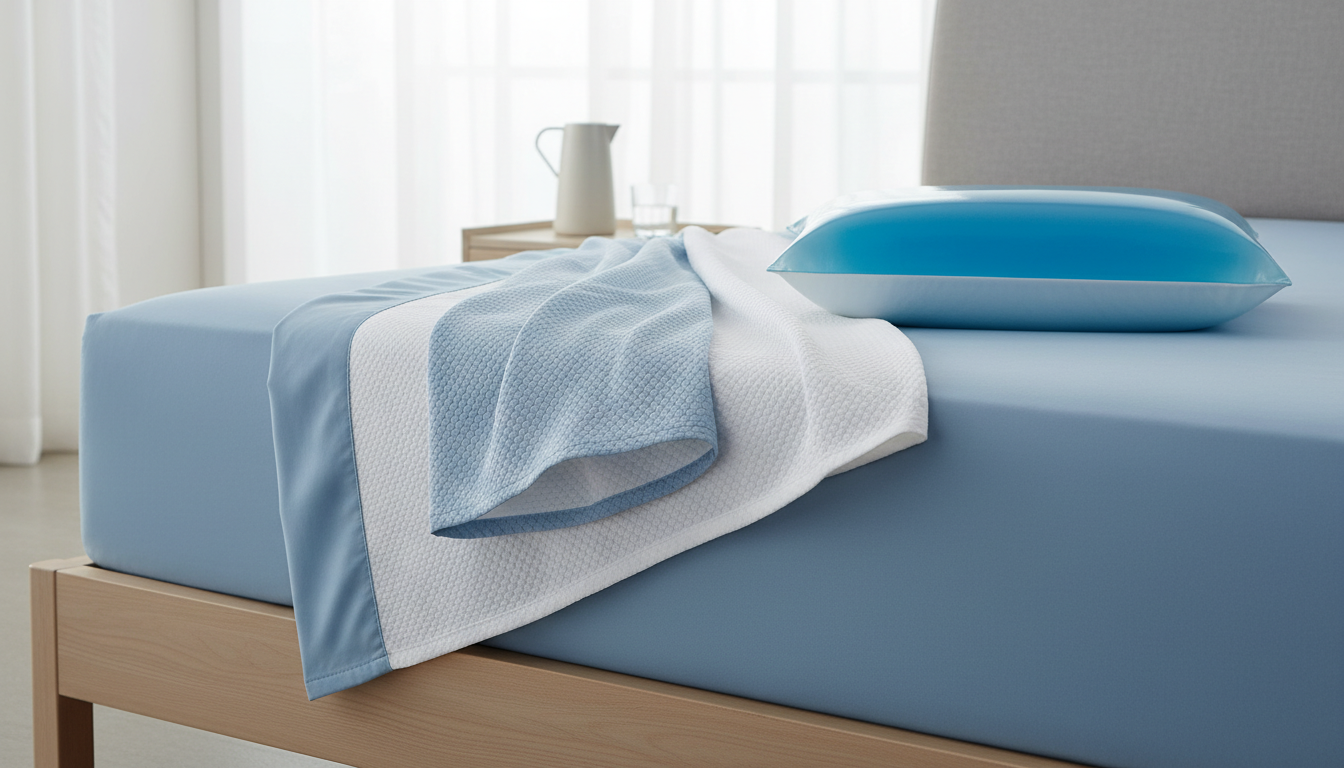
Feel: Contouring, consistently cool. More durable than gel-infused.
Cost: $500–1,200+. Only worth it if you’re serious about cooling and plan to keep your mattress long-term.
Best for: Night sweats, hot flashes, or extreme heat sensitivity. Consider before buying a new $2,000+ cooling mattress.
Pillows: Head and Neck Cooling
Your head generates significant heat. A cooling pillow can prevent the whole-bed overheating spiral.
Gel-Infused or Shredded Memory Foam Pillows
Feel: Supportive, contoured, cooler than solid memory foam. Good compromise if you like memory foam feel but want cooling.
Cost: $70–200.
Latex Pillows
Feel: Bouncy, responsive, naturally breathable. Not as contoured as memory foam but excellent for cooling.
Cost: $100–250.
Buckwheat Hull Pillows
Feel: Firm, moldable, excellent air circulation. Each hull moves independently, releasing heat. Takes adjustment if you’re used to soft pillows.
Cost: $50–150.
Best for: Serious hot sleepers; side sleepers who want firm support and cooling.
Cooling Gel Pillows
Feel: Cool to the touch initially, but effect diminishes as you warm it. Works for the first 20–30 minutes of sleep.
Cost: $40–120.
Best for: Hot flashes (night sweats) where you want fast initial cooling. Less useful if heat retention is the whole problem.
Budget Hacks for Immediate Cooling
Swap your blankets first: If you’re sleeping under a thick quilt, removing it and using only a lightweight sheet can immediately improve sleep. It costs nothing.
Use a ceiling fan or box fan: Air circulation is powerful and cheap. $30–50 for a fan beats most expensive cooling products.
Freeze your pillowcase (strategically): Stick your pillowcase in the freezer for 10 minutes before bed. Your head hits a cool surface, signaling sleep onset. Repeatable every night for zero cost.
Choose cotton sheets over what you have: Even standard cotton is cooler than many fabrics. $50–80 upgrade, immediate difference.
Reduce bedroom temperature by 2–3°F: If your thermostat is at 70°F, try 67°F. Cheap and effective.
When to Splurge: Premium Cooling Products
High-end linen sheets ($150+): If you’re a hot sleeper with a good bed budget, premium linen lasts 10+ years and improves with washing. One-time investment.
Latex topper ($300–500): Better than gel-infused memory foam. Breathes naturally, lasts longer, justifies the cost if you’re committed to your current mattress.
Active cooling mattress pad or topper ($800–2,000): Only if you’ve tried passive cooling and night sweats persist. Some people find these transformative; they’re expensive and not necessary for most.
Quality cooling pillow ($150–250): If pillows are your weak point and you’ve tried multiple options, a premium latex or buckwheat pillow is worth the investment.
Cooling Products Don’t Fix Everything
A cool bed helps, but it’s not a cure for sleep apnea, anxiety, or poor sleep habits. If you’ve cooled your environment and sleep is still disrupted, investigate other factors: your schedule, stress, caffeine timing, or screen time before bed.
Bottom Line
Start with what you have: remove heavy blankets, add a fan, and see if that alone improves sleep. If not, invest in cooling sheets (bamboo or linen, $80–150) as your next step. If you have a memory foam mattress, a gel-infused topper ($200–350) is more cost-effective than replacing the whole bed. For serious, persistent overheating, a quality cooling pillow and a latex topper together create a significantly cooler microclimate. Test changes for 1–2 weeks before adding more; sometimes one intervention (better sheets, a fan, or removing the quilt) is all that’s needed.