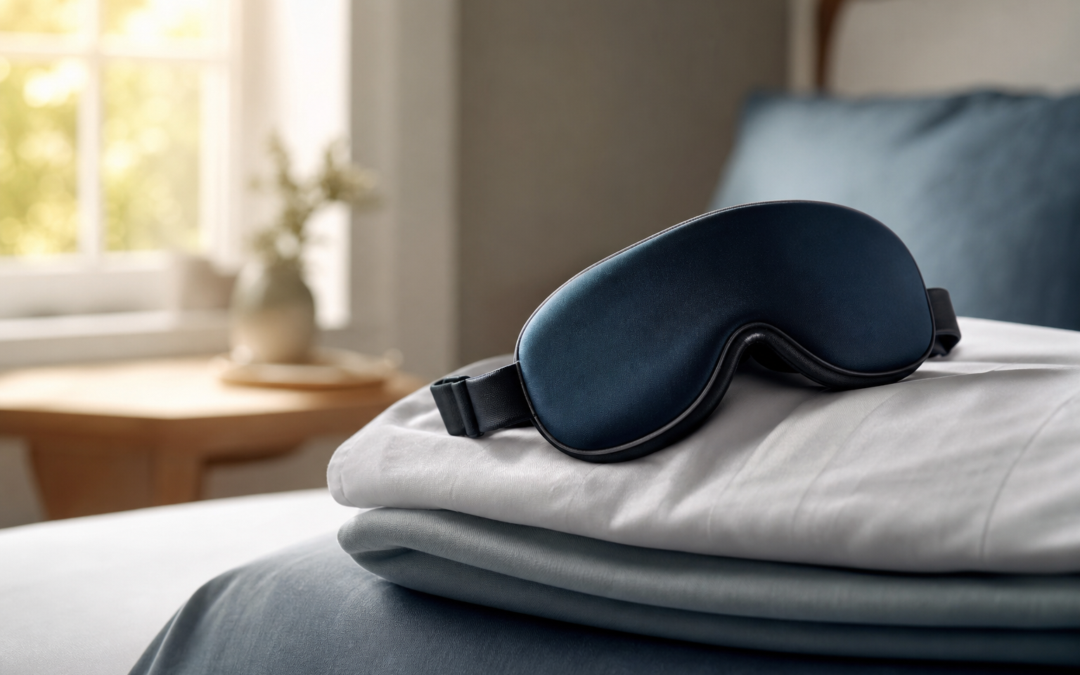
Best Sleep Mask for Side Sleepers: Features That Matter
A sleep mask can be a simple fix for bedroom light, travel, naps, or a partner who likes screens at exactly the wrong time. But if you sleep on your side, the wrong mask can feel bulky, press into your cheekbone, shift over your nose, or leave a bright little light leak right where it annoys you most.
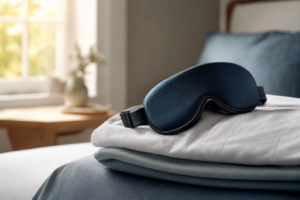
The best sleep mask for side sleepers is usually not the thickest or most dramatic-looking option. It is the one that blocks light while staying low-profile, soft at the edges, stable through position changes, and gentle around the eyes. Side sleepers need comfort first, blackout second, and adjustability close behind.
This guide explains the features that matter before you buy, what to avoid, and how to test a sleep mask without turning bedtime into a product-return hobby.
Why side sleepers need a different sleep mask
Back sleepers can often use almost any mask shape because the pillow is not pressing directly into the side of the face. Side sleepers have a harder job. The mask has to fit between the face, pillow, strap, nose bridge, cheekbone, and ear without creating pressure points.
Common side-sleeper problems include:
- Eye cups that are too tall and push into the pillow.
- Nose gaps that let light in.
- Thick seams that rub the cheek or temple.
- Straps that sit directly on the ear.
- Buckles or adjusters that press into the side of the head.
- Masks that slide when you roll from one side to the other.
A good side-sleeper mask solves those problems quietly. It should feel boring in the best possible way: no pinching, no slipping, no eye pressure, and no “why is this plastic adjuster attacking my ear?” moment at 2 a.m.
Feature 1: A low-profile shape
Low-profile sleep masks tend to work better for side sleeping because they are less likely to collide with the pillow. Look for a mask that sits close to the face without bulky foam stacks around the eyes.
That does not mean the mask has to be flat. Some contour can be helpful. The key is keeping the side edges slim enough that your pillow does not shove the mask out of place.
Best fit for most side sleepers
A side sleeper usually wants:
- Slim outer edges.
- Smooth transitions from eye area to temples.
- Minimal bulk near the cheekbone.
- A nose bridge that blocks light without digging in.
- Soft materials where the mask contacts the pillow.
If a mask looks like ski goggles, it may feel great while lying on your back and terrible once your face meets the pillow.
Feature 2: Gentle eye clearance
Some people prefer flat silk-style masks. Others prefer contoured masks with shallow eye cups. For side sleepers, either can work, but eye pressure matters.
A mask that presses directly on the eyelids can feel distracting, especially if you blink under it, have sensitive eyes, wear lash extensions, or dislike anything touching your eyes. A contoured mask creates a small space around the eyes, which some people find more comfortable.
The tradeoff is bulk. Deep eye cups may block light well but can be too tall for side sleeping. Shallow contouring is often the better compromise.
When to choose a contoured mask
A contoured sleep mask may make sense if:
- You dislike pressure on your eyelids.
- You want room to blink naturally.
- You use the mask for naps or travel.
- Flat masks make your eyes feel compressed.
When to choose a flat mask
A flat or lightly padded mask may make sense if:
- You sleep mostly on your side.
- You use a soft pillow that already supports your face.
- Bulky masks shift or press into your cheek.
- You want a lighter, simpler feel.
The best choice is the one you forget you are wearing.
Feature 3: Soft, flexible edges
Edges matter more than marketing copy. Side sleepers put pressure on the outside edge of the mask, so stiff borders, thick piping, and scratchy seams can become annoying fast.
Look for edges that are:
- Soft against the cheek and temple.
- Flexible enough to bend with the pillow.
- Smooth rather than raised or scratchy.
- Wide enough to block light but not so thick that they bunch.
A mask can have excellent blackout fabric and still be a bad side-sleeper mask if the edge construction creates pressure.
Feature 4: A strap that avoids ear pressure
The strap is where many sleep masks lose the race. For side sleepers, an adjustable strap should stay secure without crossing awkwardly over the ears or placing a hard adjuster where the head meets the pillow.
Better strap designs usually have:
- A soft elastic band.
- Easy adjustment without sharp or bulky hardware.
- A wide enough band to spread pressure.
- Adjusters positioned away from the ear and pillow contact point.
- Enough grip to prevent sliding without feeling tight.
If the mask needs to be tightened aggressively to block light, the fit is probably wrong. A good mask should seal comfortably without turning your head into a compression project.
Feature 5: Real light blocking at the nose
Most sleep mask light leaks happen around the nose. This is especially true for side sleepers because the mask can shift slightly as the pillow pushes against the face.
Useful nose-bridge features include:
- A soft nose flap.
- A flexible molded nose area.
- A cutout that matches your nose shape.
- Fabric that drapes gently instead of leaving a gap.
Avoid masks that only look large but do not seal near the nose. Extra fabric across the cheeks does not help if light still comes through the middle.
Feature 6: Breathable, skin-friendly fabric
Fabric choice affects comfort, heat, and skin feel. A mask that blocks light but makes your face warm or sweaty may not stay in your routine.
Common options include:
Silk or satin-style masks
Silk and satin-style masks can feel smooth and light. They are often popular with people who dislike rough textures. They may be good for side sleepers who want minimal bulk, although very thin designs may allow light leaks if the fit is poor.
Cotton and bamboo-style fabrics
Cotton and bamboo-style fabrics can feel soft and breathable. They may be a good middle ground for nightly use, especially if you tend to sleep warm.
Memory foam masks
Memory foam can create a comfortable seal and eye clearance, but it can also add bulk. Side sleepers should look for thinner foam profiles and soft outer edges.
Whatever fabric you choose, check the care instructions. A sleep mask sits against skin, hair products, sweat, and pillowcases. Washability is not glamorous, but neither is wearing yesterday’s face oil.
Feature 7: Pillow compatibility
A sleep mask does not work alone. Your pillow height, firmness, and sleep position can change how the mask feels.
Side sleepers using a very firm pillow may notice more pressure from bulky masks. Side sleepers using a soft pillow may find that the pillow absorbs the mask edge more comfortably, but the mask may also shift more.
If you already struggle with pillow height or neck comfort, fix the pillow setup first. A sleep mask should reduce light, not compensate for an uncomfortable sleep position.
Quick side-sleeper buying checklist
Before choosing a sleep mask, run through this checklist:
- Low-profile sides: Will the mask press into the pillow?
- Comfortable eye area: Does it avoid unwanted eyelid pressure?
- Soft edge construction: Are there raised seams or stiff borders?
- Adjustable strap: Can it stay secure without squeezing?
- No ear hardware: Are buckles or adjusters away from the ear?
- Nose light seal: Does it block light around the nose bridge?
- Breathable fabric: Will it feel comfortable in a warm bedroom?
- Easy cleaning: Can you wash it regularly?
- Return policy: Can you test fit without being stuck with it?
For side sleepers, the best mask is often a low-profile contoured mask or a soft flat mask with a good nose seal. The worst option is usually a bulky mask with stiff edges and hard strap hardware.
How to test a sleep mask at home
You do not need a complicated test. Try this simple fit check before committing.
Step 1: Test it in daylight
Put the mask on during the day and face a bright window. Look down, up, and side to side with your eyes closed. Notice where light leaks in.
Step 2: Lie on your usual side
Use your normal pillow and sleep position. Stay there for two minutes. If you feel pressure at the cheekbone, temple, eye socket, or ear, that issue will probably feel worse at night.
Step 3: Roll once or twice
Move from one side to the other. The mask should stay mostly in place without needing a tight strap.
Step 4: Check morning marks
A light fabric mark is not always a problem, but deep pressure marks, eye discomfort, headaches, or skin irritation are signs the fit may be wrong.
Step 5: Give it several nights
Some masks feel unusual on night one. Try it for a few nights if it is not causing discomfort. If it keeps waking you up, move on. A sleep product that disrupts sleep has missed the assignment.
Sleep mask vs blackout curtains
A sleep mask is useful because it is inexpensive, portable, and immediate. Blackout curtains are better for controlling the whole room, but they are harder to travel with and may not block light from hallway gaps, electronics, or a partner’s device.
For many people, the best setup is both:
- Blackout curtains or shades to reduce room light.
- A sleep mask for remaining light leaks, travel, naps, or shared bedrooms.
If you are very sensitive to light, start with the room first. Cover bright LEDs, reduce hallway light, use warmer evening lighting, and keep screens out of bed when possible. Then use the mask as the final layer.
What side sleepers should avoid
Side sleepers may want to be cautious with:
- Very deep eye cups that hit the pillow.
- Thick foam around the temples.
- Hard plastic strap adjusters.
- One-size masks with no meaningful adjustment.
- Scratchy seams or stiff piping.
- Masks that smell strongly out of the package.
- Claims that promise certain or dramatic sleep results.
A sleep mask may help block light, but it cannot fix every reason sleep feels difficult. Caffeine timing, stress, noise, room temperature, inconsistent sleep schedules, alcohol, pain, and untreated sleep disorders can all affect sleep quality.
When a sleep mask may not be enough
Light control can support a better sleep environment, but persistent sleep problems deserve more than product testing. Talk with a qualified healthcare professional if you have persistent insomnia, loud snoring, breathing pauses during sleep, severe daytime sleepiness, drowsy driving, morning headaches, significant pain, medication questions, supplement questions, or symptoms that worry you.
If you suspect sleep apnea or another sleep disorder, do not rely on a sleep mask, app, mouthpiece, supplement, or bedding change as the solution. A clinician can help determine whether evaluation or treatment is appropriate.
Bottom line
The best sleep mask for side sleepers is comfortable under pillow pressure, low-profile at the edges, gentle around the eyes, adjustable without ear irritation, and strong at blocking nose-bridge light leaks.
Do not buy only for blackout claims. Buy for fit. A mask that blocks 100% of light in a product photo but wakes you up when you roll over is not the best mask for side sleeping. Choose the option you can wear comfortably for a full night, then pair it with a darker, cooler, quieter bedroom for the best chance of consistent sleep.
Sources
- Sleep Foundation: sleep mask feature discussions and sleep environment guidance.
- Harvard Health Publishing: overview of nighttime light exposure and sleep timing.
- Research reviews on light exposure, circadian rhythms, sleep, and mood.
- Published sleep-mask research discussing ambient light blocking and overnight sleep outcomes.
Related reading
- Travel Sleep Kit: Earplugs, Mask, White Noise, and Light Control
- Weighted Blanket vs Weighted Sleep Mask: Which Makes More Sense?
- Best Bedroom Temperature for Sleep: Cool-Room Setup Guide
- Best Sleep Products for Hot Sleepers: What Actually Helps
- Side Sleeper Pillow Height Guide
Disclosure and health note
Fast Sleep Fix may earn a commission if affiliate links are added to this article in the future. This version was prepared without active affiliate links.
This article is for informational purposes only and is not medical advice. If you have persistent insomnia, suspected sleep apnea, breathing pauses during sleep, severe daytime sleepiness, drowsy driving, morning headaches, significant pain, medication or supplement questions, or other concerning symptoms, talk with a qualified healthcare professional.