If your phone is bright enough to light up the bedroom, your sleep routine is already doing extra work. The question is what to fix first: buy blue light glasses, turn on screen dimming, use night mode, or simply stop bringing a glowing rectangle into bed.
The short answer: screen dimming and evening light control usually matter more than glasses alone. Blue light glasses may help some people, especially when they block short-wavelength light well and are worn consistently in the evening. But they are not a force field against late-night scrolling, bright overhead lights, stressful content, or a bedtime that keeps moving.
A better plan is to reduce total light exposure, lower screen brightness, warm the color temperature, keep screens away from your face, and use blue light glasses as an optional extra if screens are hard to avoid.
Why evening light affects sleep
Your body uses light as a timing signal. Bright light, especially blue-rich light, can tell your brain that it is still daytime. That can delay the normal evening rise in melatonin, a hormone involved in circadian timing, and may make it harder to feel sleepy at your intended bedtime.
Blue light is not bad by itself. Daytime light helps alertness, mood, and circadian alignment. The problem is timing. Blue-rich light at night can be confusing when your body is trying to wind down.
Screens are part of the issue, but they are not the only issue. Ceiling lights, bathroom lights, LED lamps, tablets, laptops, and TVs can all contribute to nighttime light exposure. A dim phone in a dark room is very different from a bright tablet held close to your face for an hour.
Blue light glasses vs screen dimming: the practical difference
Blue light glasses and screen dimming solve related but different problems.
What blue light glasses do
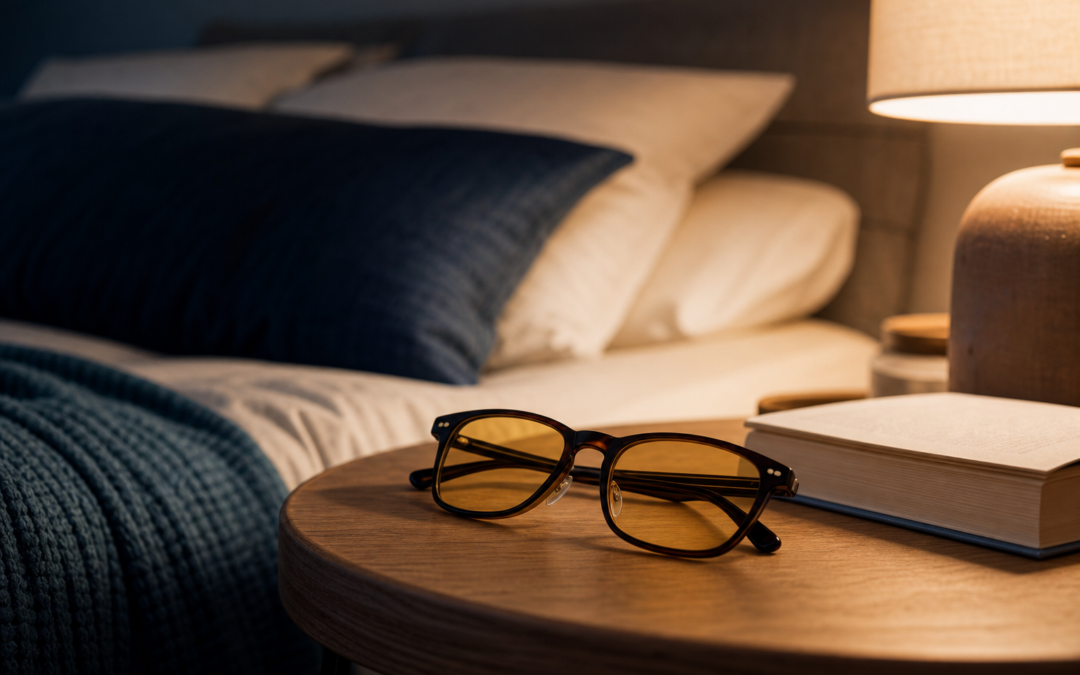
Blue light glasses use tinted or coated lenses to reduce the amount of blue light reaching your eyes. Amber or orange lenses usually block more short-wavelength light than nearly clear lenses marketed for computer use.
They may be useful if:
- You must use screens at night for work, caregiving, travel, or school.
- Your home lighting is bright and hard to control.
- You tend to forget to adjust every device individually.
- You want one simple evening cue that says, “It is time to wind down.”
The catch is that quality and tint strength vary. Some lenses block very little evening-relevant blue light. Others are strong enough to noticeably change color perception, which may be annoying for reading, entertainment, or design work.
What screen dimming does
Screen dimming lowers the total brightness of the device. Night mode, Night Shift, blue light filters, and warm-color settings also shift the screen toward warmer tones.
Screen dimming may be useful because it addresses brightness directly. Brightness matters because the circadian system responds to overall light intensity, timing, duration, distance, and spectrum. A warmer screen can still be too bright if it is close to your face in a dark room.
Good screen settings usually include:
- Lower brightness in the evening.
- Warmer color temperature after sunset.
- Dark mode when comfortable.
- Reduced white backgrounds when reading.
- A larger distance between your eyes and the screen.
- Automatic schedules so you do not have to remember.
Which matters more for sleep?
For most people, screen dimming plus better evening light habits should come first. That is because glasses only filter part of the light environment, while dimming and routine changes reduce the exposure at the source.
Think in this order:
- Reduce bright light close to bedtime. Dim room lights, especially in the final hour before bed.
- Lower screen brightness. A blazing screen at arm’s length is not helping.
- Warm the screen color. Use Night Shift, Night Light, bedtime mode, or a similar setting.
- Move screens away from bed. Distance and behavior matter, not just color.
- Use blue light glasses if needed. They can be a useful add-on, not a complete sleep routine.
If you do only one thing, dim the screen and the room. If you do two things, dim and set a screen curfew. If you cannot avoid nighttime screens, then amber blue light glasses may be worth testing.
When blue light glasses may help
Blue light glasses may make the most sense when screen avoidance is unrealistic. For example:
- You work evening shifts or rotating schedules.
- You are a student reading or writing at night.
- You are a parent or caregiver who needs to be reachable.
- You travel across time zones and need to manage light exposure.
- You share a home where the lighting environment is not fully under your control.
Small studies suggest amber lenses worn before bed may improve some sleep measures in certain groups, including people with insomnia symptoms. But the evidence is not a blank check. Results vary, studies can be small, and glasses do not cancel out caffeine timing, stress, irregular sleep schedules, alcohol, untreated sleep disorders, or hours of stimulating content.
If you try them, use them consistently for a week or two and track how you feel. Pay attention to sleepiness at bedtime, time to fall asleep, nighttime awakenings, and next-day alertness.
When screen dimming is enough
Screen dimming may be enough if your main issue is casual evening phone use rather than required late-night work.
Start with these settings:
Set an automatic warm-light schedule
Turn on your device’s warm-color setting from sunset until morning. Depending on the device, this may be called Night Shift, Night Light, Eye Comfort Shield, bedtime mode, or blue light filter.
Set it once and let automation do the boring part. Manual settings are great until you forget them for nine nights in a row.
Lower brightness more than feels normal
Many people keep screens brighter than needed at night. Try reducing brightness until the screen is readable but not glowing across the room. If your eyes strain, increase it slightly rather than forcing an uncomfortable setting.
Use dark mode carefully
Dark mode can reduce bright white backgrounds, but it is not magic. High-contrast text can bother some readers, and bright images or videos still produce light. Use it if it feels comfortable.
Keep the screen out of bed
This may matter as much as the light itself. Bedtime scrolling can delay sleep because of content, emotion, novelty, and time loss. A dim screen showing stressful news is still not a wind-down routine.
If possible, charge your phone across the room and use a separate alarm clock. If that is not realistic, keep the phone face down, out of reach, and in bedtime mode.
Best setup if you use screens before bed
If screens are part of your evening, use a layered setup:
- Two hours before bed: reduce overhead brightness and switch to warmer lamps.
- One hour before bed: turn on warm screen settings, dim brightness, and avoid work or emotionally intense content when possible.
- Thirty minutes before bed: switch to low-stimulation activities such as reading, stretching, calm audio, or planning tomorrow on paper.
- At bedtime: keep the phone away from the bed or use do-not-disturb settings.
Blue light glasses can fit into this routine during the last one to two hours before bed, especially if you are still exposed to screens or bright indoor lighting.
What to look for in blue light glasses
If you decide to try blue light glasses for sleep, focus on practical features rather than vague marketing.
Look for:
- Amber or orange lenses for stronger evening blue-light reduction.
- Published information about what wavelengths the lenses block.
- Comfort for one to two hours of evening wear.
- A fit that works over prescription glasses if needed.
- A return policy, because tint preference is personal.
Be cautious with claims that glasses will guarantee better sleep, cure insomnia, fix eye damage, or replace medical care. Those claims are not appropriate. Glasses may support a wind-down routine for some people, but sleep is affected by many factors.
What not to expect from either option
Neither blue light glasses nor screen dimming can override every sleep disruptor.
They will not reliably fix:
- Irregular sleep and wake times.
- Late caffeine or nicotine use.
- Heavy alcohol close to bed.
- Untreated sleep apnea symptoms.
- Chronic pain.
- Medication side effects.
- Anxiety, depression, or ongoing stress.
- A bedroom that is too hot, noisy, or bright.
They also will not make late-night entertainment harmless. If a show, game, conversation, or app keeps your brain highly engaged, reducing blue light may help only a little.
A simple seven-night test
If you want to know what actually helps you, run a low-drama seven-night test.
Nights 1–3: dimming only
- Turn on warm screen mode after sunset.
- Lower brightness in the final two hours before bed.
- Dim room lights in the final hour.
- Keep screens out of bed.
Nights 4–7: add blue light glasses
- Keep the same dimming routine.
- Wear amber blue light glasses during the final one to two hours before bed.
- Do not add new supplements, major schedule changes, or a new late-night habit at the same time.
Track:
- Bedtime.
- Wake time.
- How sleepy you felt at lights out.
- Estimated time to fall asleep.
- Number of awakenings.
- Morning energy.
This will not be a laboratory-grade experiment, but it can show whether glasses add anything noticeable beyond dimming.
When to talk with a clinician
Evening light changes are reasonable sleep-habit adjustments, but they are not medical treatment. Talk with a qualified healthcare professional if you have persistent insomnia, loud snoring, breathing pauses during sleep, severe daytime sleepiness, drowsy driving, morning headaches, chest pain, shortness of breath, significant pain, medication questions, supplement questions, or symptoms that worry you.
If you suspect sleep apnea or another sleep disorder, do not rely on glasses, apps, or screen settings as the solution. A clinician can help determine whether evaluation or treatment is appropriate.
Bottom line
Screen dimming matters more for most people because it reduces light at the source and encourages better bedtime behavior. Blue light glasses can be useful when evening screens or bright indoor lighting are hard to avoid, especially if the lenses are amber, comfortable, and worn consistently.
The best answer is not glasses versus dimming. It is dim the screen, warm the color, reduce room light, move the phone away from bed, and consider glasses only if your evening routine still exposes you to too much light.
Sources
- Harvard Health Publishing: Blue light and circadian rhythm overview.
- American Optometric Association: Blue-blocking lenses, device light, and sleep discussion.
- Scientific literature reviews on blue light exposure, circadian timing, alertness, and sleep outcomes.
Related reading
- Melatonin Alternatives: Non-Habit Sleep Routine Options
- Jet Lag vs Social Jet Lag: How To Reset Without Overdoing It
- Shift Worker Sleep Schedule Template: A Practical Plan for Nights, Rotations, and Recovery Days
- Sleep Tracker Metrics That Actually Matter
Disclosure and health note
Fast Sleep Fix may earn a commission if affiliate links are added to this article in the future. This version was prepared without active affiliate links.
This article is for informational purposes only and is not medical advice. If you have persistent insomnia, suspected sleep apnea, breathing pauses during sleep, severe daytime sleepiness, drowsy driving, chest pain, shortness of breath, pain, medication or supplement questions, or other concerning symptoms, talk with a qualified healthcare professional.