Travel sleep is rarely perfect. Hotel hallway noise, glowing electronics, early sunlight, dry airplane cabins, unfamiliar pillows, and schedule changes can all make it harder to settle down. A good travel sleep kit will not magically override jet lag or guarantee a full night of rest, but it can reduce the most common sleep disruptors: noise, light, temperature swings, and an overactive brain in a new place.
The best kit is not a giant bag of gadgets. It is a small, repeatable setup you can pack without thinking: something for noise, something for light, something for comfort, and a simple plan for when your schedule is off.
Below is a practical, compliant guide to building a travel sleep kit for planes, hotels, guest rooms, road trips, and work travel.
What a travel sleep kit should do
A useful sleep kit should help you control four things:
- Noise: engines, elevators, street traffic, neighbors, doors, and unfamiliar house sounds.
- Light: sunrise, hallway gaps, bright clocks, standby LEDs, bathroom lights, and screen glow.
- Comfort: pressure points, dry air, scratchy bedding, temperature changes, and awkward sleep positions.
- Routine cues: small signals that tell your brain it is time to wind down, even when the room is not your usual bedroom.
The goal is not to create a perfect bedroom everywhere. The goal is to create enough consistency that your body has fewer surprises to fight.
The core travel sleep kit
1. Earplugs that are comfortable enough to actually use
Earplugs are usually the first item to pack because travel noise is hard to predict. Foam plugs can block a lot of sound, but some people dislike the pressure or the feeling of expansion in the ear canal. Reusable silicone or loop-style plugs may feel more comfortable for side sleepers, though they may block less noise depending on fit.
For travel, prioritize:
- A secure fit that does not fall out when you roll over.
- Low profile if you sleep on your side.
- A small case so they do not collect lint in your bag.
- A backup pair, because one earplug always seems to vanish at exactly the wrong time.
If earplugs cause pain, ringing, irritation, or pressure, stop using that style and consider a different fit. If you have ear infections, ear surgery history, or ongoing ear symptoms, ask a healthcare professional before relying on in-ear plugs.
2. A sleep mask that blocks light without pressing on your eyes
A sleep mask can be the difference between waking at 5:30 a.m. in a bright hotel room and getting another sleep cycle. The best travel mask depends on your sleep position.
Look for:
- A contoured shape if you dislike pressure on your eyelids.
- A soft, adjustable strap that does not dig into your head.
- A nose bridge or light-blocking flap if light leaks bother you.
- A breathable fabric if you run warm.
- A thin profile if you are packing light.
For side sleepers, bulky masks may shift or press into the pillow. A softer, lower-profile mask may be easier to tolerate, even if it blocks slightly less light.
3. Portable white noise or steady background sound
Travel noise is often intermittent: a door slam, a truck backing up, a conversation in the hallway. Steady sound may help mask those sudden changes so they feel less jarring.
Options include:
- A small travel white noise machine.
- A phone app with downloaded sound files.
- Sleep earbuds or headphones if they are comfortable for your sleep position.
- A hotel fan or HVAC fan set to constant mode when available.
White noise is not better for everyone. Some people prefer brown noise, pink noise, rain sounds, fan sounds, or no sound at all. The best choice is the one that feels calming and does not require constant adjustment.
Keep the volume moderate. Loud sound near the ears can be uncomfortable and may not be appropriate for every sleeper. If you use earbuds, make sure the fit does not cause pressure while side sleeping.
4. Light-control basics for rooms you cannot redesign
You cannot remodel a hotel room, but you can fix a surprising number of light leaks in two minutes.
Pack or use:
- A sleep mask for the biggest light problem.
- A few small pieces of removable tape for standby lights, if safe and allowed.
- A clip or hanger to close curtain gaps.
- A phone charger that lets your phone stay face down and away from the bed.
- A dim night-light for bathroom trips if total darkness creates a tripping hazard.
Do not cover anything that produces heat, blocks ventilation, or belongs to emergency equipment. Safety beats darkness. Every time.
5. A small comfort layer
Travel sleep often falls apart because of small discomforts: cold feet, a dry throat, a scratchy pillowcase, or a neck angle that works for ten minutes and then becomes annoying.
Useful comfort items can include:
- A soft travel blanket or large scarf.
- Warm socks.
- A familiar pillowcase.
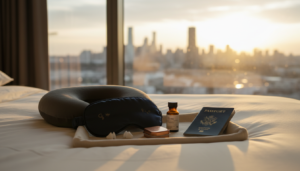
- A compact neck pillow for upright travel.
- Lip balm or saline spray if dry air bothers you.
- A reusable water bottle for hydration earlier in the day.
Keep this section small. If your kit needs its own suitcase, it has failed the assignment.
Travel sleep kit for planes
Airplane sleep has three main problems: upright posture, cabin noise, and light changes you do not control.
Pack:
- Earplugs or comfortable noise-reducing earbuds.
- A sleep mask.
- A neck pillow or scarf that supports your head without pushing your neck forward.
- Layers, because cabin temperature can swing from sauna to refrigerator.
- Downloaded white noise or calming audio, not streaming-only audio.
- Water, used sensibly, so you are not waking constantly for bathroom trips.
If you take overnight flights, try to match your sleep attempt to the destination schedule when practical. The CDC notes that light exposure at the destination can help with jet lag adjustment, and very long daytime naps after arrival can make adjustment harder. That does not mean forcing yourself through unsafe exhaustion; it means using light, naps, and bedtime intentionally.
Travel sleep kit for hotels
Hotel rooms can be sleep-friendly or deeply unserious. The kit helps either way.
Before bed:
- Close curtains fully and clip gaps if needed.
- Cover small standby lights only when it is safe.
- Set the room temperature slightly cool if you control it.
- Put your phone face down and out of reach.
- Choose your noise plan: earplugs, fan, white noise app, or machine.
- Put the sleep mask where you can find it if you wake early.
If hallway noise is the problem, a towel at the bottom of the door may reduce some light and sound. Do not block emergency exits, sprinklers, vents, or anything safety-related.
Travel sleep kit for guest rooms and shared spaces
Guest rooms add a different problem: politeness. You may not control the thermostat, curtains, pets, hallway lights, or household schedule.
Pack items that do not require negotiation:
- Sleep mask.
- Earplugs.
- Small white noise source.
- Familiar pillowcase.
- Warm socks or a light layer.
- A compact reading light if you wind down before others.
If you are staying with family or friends, a simple heads-up helps: “I sleep better with white noise, so I brought a small machine.” That is better than trying to explain your full sleep philosophy at midnight in someone else's hallway.
What about melatonin for travel?
Some travelers use melatonin for schedule shifts, but it is not a casual candy bowl item. Timing, dose, medical history, medications, pregnancy, and next-day alertness can matter. If you are considering melatonin or any supplement for travel sleep, especially for children, pregnancy, medical conditions, or medication interactions, ask a qualified healthcare professional.
For many trips, the lower-risk first move is environmental control: darkness, steady sound, a cooler room, caffeine timing, and morning light at the destination.
How to pack a minimalist travel sleep kit
If you want the smallest useful kit, start here:
- One pair of comfortable earplugs plus a backup pair.
- One sleep mask.
- Downloaded white noise or a small sound machine.
- A curtain clip or safe removable tape for tiny light leaks.
- Warm socks.
- A familiar pillowcase.
Put everything in a small pouch that lives inside your travel bag. Refill it after each trip so you are not rebuilding the system every time you pack.
How to use the kit without overthinking it
A simple travel routine can be more useful than a perfect product list:
- Decide your target bedtime based on local time.
- Dim screens and lights 30 to 60 minutes before bed when possible.
- Set up the room before you are exhausted.
- Choose either earplugs or white noise first; use both only if needed and comfortable.
- Put the mask on when lights are out, not after an hour of frustration.
- If you cannot sleep, keep the room calm and dark rather than starting a high-stimulation scroll session.
Travel sleep is often lighter than home sleep. That does not mean the night is ruined. Reducing disruptions can still help you feel more functional the next day.
When travel sleep problems need medical attention
Occasional rough travel sleep is common. But talk with a healthcare professional if you have persistent insomnia, breathing pauses during sleep, loud snoring with severe daytime sleepiness, drowsy driving, chest pain, shortness of breath, unusual nighttime sweating, severe anxiety, significant pain, or questions about medications or supplements.
If you suspect sleep apnea or another sleep-related breathing issue, do not try to solve it with a travel accessory. Environmental tools may make a room more comfortable, but they are not a substitute for medical evaluation.
Bottom line
A travel sleep kit works best when it is boring, compact, and repeatable. Pack earplugs for unpredictable noise, a sleep mask for unwanted light, a portable sound option for sudden disruptions, and a few comfort basics that make unfamiliar rooms feel less disruptive.
The point is not to force perfect sleep on every trip. It is to remove the easy obstacles so your body has a better chance to rest while you are away from home.
Sources
- CDC Yellow Book: Jet Lag Disorder and travel sleep timing guidance.
- Sleep Foundation: Jet lag and circadian adjustment overview.
Disclosure and health note
Fast Sleep Fix may earn a commission if affiliate links are added to this article in the future. This version was published without active affiliate links.
This article is for informational purposes only and is not medical advice. If you have persistent insomnia, suspected sleep apnea, breathing pauses during sleep, severe daytime sleepiness, drowsy driving, chest pain, shortness of breath, pain, medication or supplement questions, or other concerning symptoms, talk with a qualified healthcare professional.