
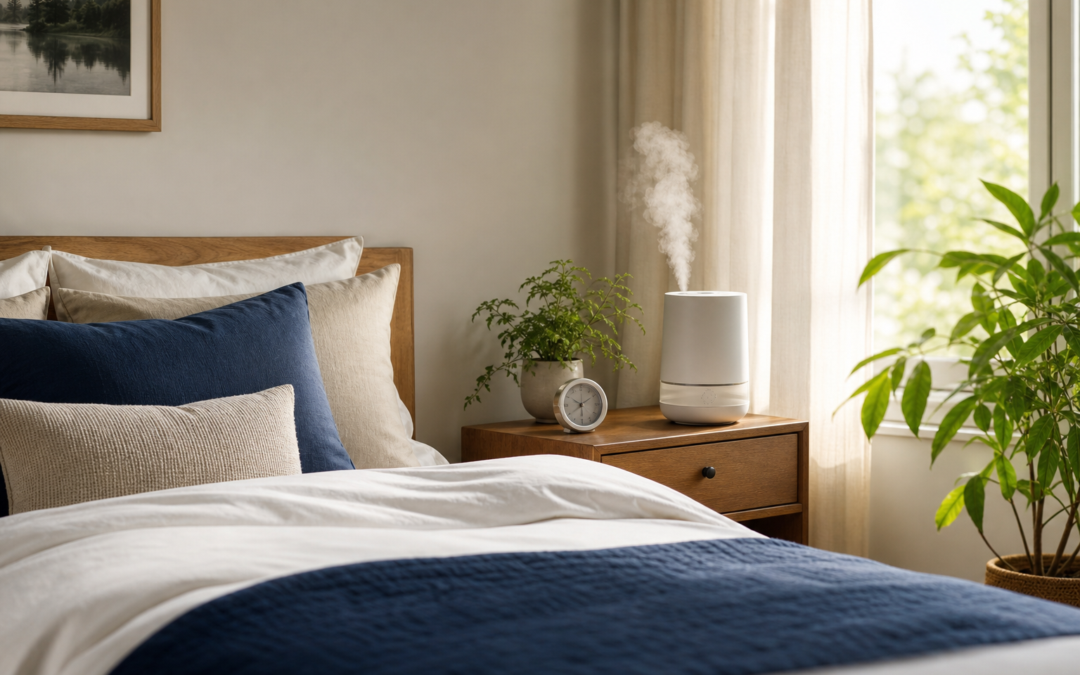
The best humidity for sleep is usually a comfortable middle range, not a perfectly engineered number. A practical target for many bedrooms is about 30% to 50% relative humidity, with the main goal being to avoid air that feels too dry, too damp, or too stuffy.
Humidity is only one part of the sleep environment. Temperature, airflow, noise, light, bedding, allergies, and your sleep schedule all matter too. But if your bedroom often feels sticky, dry, musty, or hard to breathe in, humidity is worth checking.
This guide explains what humidity does, how to spot common problems, and how to adjust your room without turning bedtime into a home-lab experiment.
What does bedroom humidity mean?
Humidity is the amount of water vapor in the air. When people talk about indoor humidity, they usually mean relative humidity, which compares how much moisture is in the air with how much the air could hold at that temperature.
That is why a bedroom can feel different at the same humidity percentage depending on temperature. Warm air can hold more moisture, so a warm, humid room often feels heavy and sticky. A cooler room with balanced humidity may feel more comfortable even when the number on a meter is not perfect.
For sleep, the goal is simple: keep the room comfortable enough that moisture is not waking you up, drying you out, worsening stuffiness, or encouraging mold and dampness.
What is the best humidity range for sleep?
A useful starting point is 30% to 50% relative humidity. The U.S. Environmental Protection Agency recommends keeping indoor humidity between 30% and 50% as part of healthy indoor air practices, especially because high humidity can increase the likelihood of mold.
Some sleep-environment guidance allows a slightly wider comfort range, but the big rule is to avoid extremes. If humidity regularly climbs above about 60%, the room may feel damp and can become friendlier to mold and dust mites. If humidity drops very low, the air may feel drying to your throat, nose, eyes, and skin.
You do not need to chase a single perfect number. A bedroom that stays roughly in the middle range, feels comfortable, and does not show moisture problems is usually a better target than obsessing over tiny overnight changes.
Related reading: Best Bedroom Temperature for Sleep: Cool-Room Setup Guide
How high humidity can disturb sleep
High humidity can make a bedroom feel warmer than it is because sweat does not evaporate as easily. That can leave you feeling sticky, restless, or overheated even when the thermostat looks reasonable.
Common signs your bedroom may be too humid include:
- Waking up sweaty or clammy.
- Bedding feeling damp or heavy.
- A musty smell in the room or closet.
- Condensation on windows.
- Visible mold or mildew.
- More allergy-like irritation when you sleep in that room.
- The room feeling stuffy even with a fan running.
High humidity is not always the only cause of these problems. Overly warm bedding, poor airflow, alcohol, certain medications, hormonal changes, illness, and other health factors can also contribute to night sweating or discomfort. If night sweats are frequent, severe, unexplained, or paired with fever, weight loss, chest symptoms, breathing problems, or severe daytime fatigue, talk with a qualified healthcare professional.
Related reading: Why You Wake Up Sweating at Night: Bedroom Fixes First
How low humidity can disturb sleep
Low humidity can make the air feel dry and irritating. Some people notice it most in winter, in desert climates, or when heating systems run for long stretches.
Common signs your bedroom may be too dry include:
- Waking with a dry throat or dry mouth.
- A scratchy nose or irritated nasal passages.
- Dry eyes or itchy skin.
- Static electricity around bedding or clothing.
- Feeling more aware of breathing through the nose at night.
Dry air does not automatically mean you need a humidifier. First, measure the room. If humidity is already in a reasonable range, the problem may be mouth breathing, nasal congestion, medication side effects, allergies, dehydration, or another issue.
If dry mouth is persistent, you snore loudly, wake gasping, have morning headaches, or feel very sleepy during the day, consider medical guidance. Those symptoms can sometimes point to sleep-disordered breathing or another condition that should not be solved with bedroom tweaks alone.
Measure before you buy anything
Before buying a humidifier, dehumidifier, air purifier, new bedding, or a smarter thermostat, get a small digital hygrometer. It is a simple device that shows relative humidity and often temperature.
Use it for one week:
- Put it near the bed, away from direct airflow.
- Check the room before bed and after waking.
- Note whether the room felt dry, damp, stuffy, or comfortable.
- Track bedroom temperature too.
- Look for patterns instead of reacting to one odd reading.
This matters because the same room can behave differently by season, weather, HVAC settings, shower steam, window use, and whether the door stays open. Measuring prevents you from fixing the wrong problem, which is an underrated sleep skill.
If your bedroom is too humid
If your bedroom regularly runs above the comfortable range, start with low-risk fixes.
Improve airflow first
A damp room often needs air movement and moisture control. Try:
- Leaving the bedroom door cracked if the room traps air.
- Using a quiet fan on a low setting.
- Opening a window when outdoor temperature and air quality are reasonable.
- Keeping vents unblocked.
- Making sure furniture is not pressed tightly against cold exterior walls.
Airflow will not solve every moisture problem, but stagnant air can make moderate humidity feel worse.
Reduce moisture sources
Moisture can come from daily routines, not just the weather. Check for:
- Wet towels drying in the bedroom.
- Poor bathroom ventilation after showers.
- Houseplants grouped near the bed.
- Leaks around windows, walls, or ceilings.
- Damp laundry indoors.
- Humidifiers running too long.
If you smell mustiness or see visible mold, treat that as a home-health issue, not just a sleep comfort issue. Mold cleanup and moisture control may require proper repair or professional help depending on the extent.
Consider a dehumidifier when simple fixes are not enough
A dehumidifier may help if the bedroom or nearby area stays damp despite basic airflow and ventilation fixes. Choose one sized for the room and empty or drain it according to the instructions.
Keep expectations realistic. A dehumidifier can reduce moisture, but it will not fix a leak, poor drainage, roof problem, or bathroom fan that vents badly. If humidity keeps returning quickly, look for the source.
If your bedroom is too dry
If your room regularly sits below the comfortable range and you wake up feeling dry, start gently.
Add moisture carefully
A humidifier may help some people feel more comfortable in dry conditions. If you use one:
- Follow the manufacturer’s cleaning instructions.
- Use clean water as directed.
- Do not let humidity climb too high.
- Keep the device away from bedding and walls.
- Empty and dry it when not in use.
A poorly maintained humidifier can make the room less healthy, not more comfortable. The goal is balanced air, not a tiny indoor rainforest.
Try non-device fixes too
You may not need a machine if the issue is mild. Helpful steps can include:
- Lowering overheated indoor temperatures.
- Avoiding direct fan or vent airflow at your face.
- Staying hydrated earlier in the day.
- Addressing nasal congestion or allergies with clinician-approved options.
- Keeping bedding breathable so you are not overheating and mouth breathing.
If dry air symptoms continue despite a reasonable humidity range, look beyond humidity.
Humidity works best with temperature and airflow
Humidity does not operate alone. A room at 68°F with 45% humidity can feel very different from a room at 75°F with the same humidity. Warm, stagnant air can feel uncomfortable even when the humidity number is technically acceptable.
For many people, a better sleep environment starts with this sequence:
- Set a cooler, comfortable bedroom temperature.
- Keep humidity in a moderate range.
- Add gentle airflow if the room feels stale.
- Use breathable bedding and sleepwear.
- Reduce light and noise disruptions.
If you are a hot sleeper, do not treat humidity as the only lever. Bedding weight, mattress materials, pajamas, partner heat, alcohol, and room airflow can all change how warm you feel.
Related reading: Best Sleep Products for Hot Sleepers: What Actually Helps
Special situations: allergies, snoring, and breathing symptoms
Humidity can affect comfort, but it should not be used as a substitute for medical evaluation when symptoms suggest something more serious.
Consider talking with a qualified healthcare professional if you have:
- Loud snoring with breathing pauses.
- Gasping, choking, or waking short of breath.
- Severe daytime sleepiness.
- Morning headaches with snoring or dry mouth.
- Persistent nasal obstruction.
- Wheezing, chest tightness, or asthma symptoms.
- Ongoing allergy symptoms that worsen in the bedroom.
- Visible mold or suspected dampness-related health symptoms.
A more comfortable bedroom can support sleep quality, but breathing issues need the right diagnosis and plan.
Related reading: How To Know If Snoring Might Be More Than Annoying
A simple 7-night bedroom humidity test
If you suspect humidity is hurting your sleep, run a small experiment before changing everything.
Nights 1 and 2: measure only
Track bedtime humidity, morning humidity, bedroom temperature, and how the room felt. Do not change anything yet.
Nights 3 and 4: adjust airflow
Try a fan, cracked door, open vent, or window when conditions are safe and reasonable. Keep bedding the same.
Nights 5 and 6: adjust moisture
If humidity is high, reduce moisture sources or test a dehumidifier if you already have one. If humidity is low, use a carefully maintained humidifier or reduce drying airflow.
Night 7: compare
Look for patterns. Did the room feel better within the 30% to 50% range? Did temperature matter more than humidity? Did airflow help even when the humidity number barely changed?
Small tests are better than buying three devices at once and having no idea which one helped.
Common mistakes to avoid
Chasing one perfect humidity number
Sleep comfort is not that precise. Aim for a healthy, comfortable range and pay attention to how the room feels.
Running a humidifier without cleaning it
Humidifiers need maintenance. If cleaning sounds unrealistic, choose a simpler setup or use it only when dry conditions truly require it.
Ignoring mold or leaks
A musty smell, visible mold, or recurring condensation deserves attention. Do not cover up a moisture problem with fragrance, extra fans, or wishful thinking.
Forgetting temperature
Humidity and temperature work together. If the room is too warm, lowering humidity may help, but a cooler room and lighter bedding may matter more.
Treating breathing symptoms as a bedroom-only problem
Snoring, gasping, choking, morning headaches, and severe sleepiness deserve proper evaluation. Bedroom changes can support comfort, but they cannot rule out sleep apnea or other health concerns.
Bottom line
The best humidity for sleep is usually a moderate range around 30% to 50% relative humidity, paired with a cool, comfortable room and enough airflow to prevent stuffiness. If your bedroom feels damp, musty, dry, or irritating, measure it for a week before buying anything.
Use humidity as one practical sleep-environment lever. If symptoms are persistent, severe, or connected to breathing problems, pain, medication questions, or major daytime sleepiness, get guidance from a qualified healthcare professional.
Sources
- U.S. Environmental Protection Agency: Care for Your Air: A Guide to Indoor Air Quality.
- Basner M, et al. Associations of Bedroom PM2.5, CO2, Temperature, Humidity and Noise with Sleep: an Observational Actigraphy Study. *Sleep Health*. 2023.
- Sleep Foundation: Humidity and Sleep: Optimize Your Sleep Environment.
Disclosure and health note
Fast Sleep Fix may earn a commission if we add product links to this article in the future. This article currently contains no affiliate links. The information here is for general education only and is not medical advice. If you have persistent insomnia, loud snoring, breathing pauses, gasping or choking at night, severe daytime sleepiness, drowsy driving, chest symptoms, ongoing pain, medication questions, or any other health concern, talk with a qualified healthcare professional.