How To Know If Snoring Might Be More Than Annoying
Quick answer
Snoring is not automatically a crisis. Plenty of people snore occasionally because of congestion, alcohol, back-sleeping, allergies, or a rough night of sleep. Annoying? Yes. Proof your airway is auditioning for a leaf blower commercial? Not always.
But snoring deserves more attention when it is loud, frequent, getting worse, or paired with signs that breathing or sleep quality may be disrupted.
The biggest red flags include:
- Breathing pauses witnessed by a partner.
- Gasping, choking, or snorting during sleep.
- Severe daytime sleepiness or drowsy driving.
- Morning headaches, dry mouth, or sore throat.
- Trouble focusing, irritability, or unrefreshing sleep.
- High blood pressure concerns.
- Snoring that is loud enough to disturb a partner most nights.
Those signs do not prove sleep apnea by themselves, but they are strong reasons to talk with a clinician. A sleep study may be needed to know what is actually happening.
Why snoring happens
Snoring is the sound of airflow moving past relaxed tissues in the throat and airway during sleep. As those tissues relax, the airway can narrow. Moving air makes the tissue vibrate, producing the familiar harsh, rattling, or chainsaw-adjacent sound.
Common factors that can make snoring more likely include:
- Sleeping on your back.
- Alcohol close to bedtime.
- Nasal congestion or allergies.
- Sleep deprivation.
- Weight gain or extra tissue around the neck/throat.
- Certain sedating medications or muscle relaxants.
- Anatomy, such as a narrow airway, enlarged tonsils, or a deviated septum.
Some of those are lifestyle or setup issues. Some are medical or anatomical. That difference matters, because a nasal strip is not a treatment plan for breathing pauses. It is a sticker. Useful sometimes, but not magic. Mercedes strategists have tried that approach. It ends badly.
Snoring vs. sleep apnea: the important difference
Snoring can be “primary snoring,” meaning it is noisy but not necessarily causing repeated breathing disruptions or oxygen changes. It can also be a symptom of obstructive sleep apnea, a sleep-related breathing disorder where the airway repeatedly becomes partly or fully blocked during sleep.
The key point: not everyone who snores has sleep apnea, but snoring is one of the common warning signs.
Sleep apnea often involves a pattern like this:
- Loud snoring.
- A pause, silence, or reduced breathing.
- Choking, gasping, snorting, or brief arousal.
- The cycle repeats through the night.
The person sleeping through it may not remember any of this. Often, the bed partner notices the warning signs before the person snoring realizes anything is wrong.
Warning signs that snoring may need medical evaluation
1. Someone notices breathing pauses
If a partner, roommate, or family member says you stop breathing, breathe irregularly, or go silent between snores, do not ignore it.
The NHLBI lists breathing that starts and stops, frequent loud snoring, and gasping for air among sleep apnea symptoms during sleep. That does not mean panic. It does mean the issue has moved beyond “buy better earplugs” and into “ask a healthcare professional.”
2. Gasping, choking, or snorting at night
Gasping or choking sounds can happen when the body briefly arouses to reopen the airway. AASM identifies choking, gasping, or silent breathing pauses with snoring as warning signs for possible obstructive sleep apnea.
If this is happening regularly, especially with daytime symptoms, get checked. Do not try to self-diagnose with a gadget cart and vibes.
3. Severe daytime sleepiness
Feeling tired after one bad night is normal. Feeling dangerously sleepy during the day, nodding off unintentionally, or struggling to stay awake while driving is not something to “optimize” with one more coffee.
Snoring plus daytime sleepiness can suggest sleep is being repeatedly disrupted. If you have drowsy driving or severe daytime sleepiness, talk with a clinician promptly.
4. Morning headaches, dry mouth, or sore throat
Morning headaches, dry mouth, and sore throat can have multiple causes, including dehydration, mouth breathing, congestion, or sleep disruption. They are not proof of sleep apnea, but when they show up with loud snoring or gasping, they belong on the “bring this up” list.
5. Trouble concentrating, mood changes, or unrefreshing sleep
Poor sleep quality can show up as brain fog, irritability, poor focus, or waking up feeling like you barely slept. These symptoms are broad, so they need context. But paired with loud snoring, they may point toward more than a noise problem.
6. High blood pressure concerns
Snoring with high blood pressure concerns should be discussed with a healthcare professional. AASM notes that high blood pressure is common among people with obstructive sleep apnea. That does not mean snoring caused it, but it is another reason not to shrug off loud, frequent snoring.
7. Regular snoring in children
Children can snore, especially with colds or allergies. But regular snoring in a child should be discussed with a pediatric clinician, particularly if there are behavior changes, school attention problems, bedwetting, restless sleep, or pauses in breathing.
What to track before you talk to a clinician
If you are going to bring up snoring, make the visit easier by collecting useful observations for one to two weeks.
Track:
- How many nights per week snoring happens.
- Whether it is light, moderate, or very loud.
- Whether it is worse on your back.
- Alcohol timing and amount.
- Nasal congestion or allergy symptoms.
- Bedtime and wake time.
- Morning headaches, dry mouth, or sore throat.
- Daytime sleepiness, naps, or drowsy driving.
- Any witnessed pauses, gasping, choking, or snorting.
- Current medications or supplements that might affect sleep or breathing.
If you sleep alone, a simple audio recording or snore-tracking app may help you notice patterns. Treat it as a clue, not a diagnosis. Apps cannot rule out sleep apnea.
Safer first steps that may help simple snoring
If there are no red flags—no breathing pauses, no choking/gasping, no severe daytime sleepiness, no concerning symptoms—some basic changes may help reduce ordinary snoring.
Try side sleeping
Snoring is often worse on the back because gravity can narrow the airway. Side sleeping may help some people. A body pillow, positional pillow, or backpack-style positional reminder may support the habit.
Internal link opportunity: link to FSF’s side-sleeper pillow guide once drafted.
Reduce alcohol close to bedtime
Alcohol can relax throat muscles and worsen snoring for some people. If snoring is worse after drinks, try moving alcohol earlier, reducing intake, or skipping it near bedtime and tracking the difference.
Use soft language here. Results vary. Some people see a clear pattern; others do not.
Address congestion
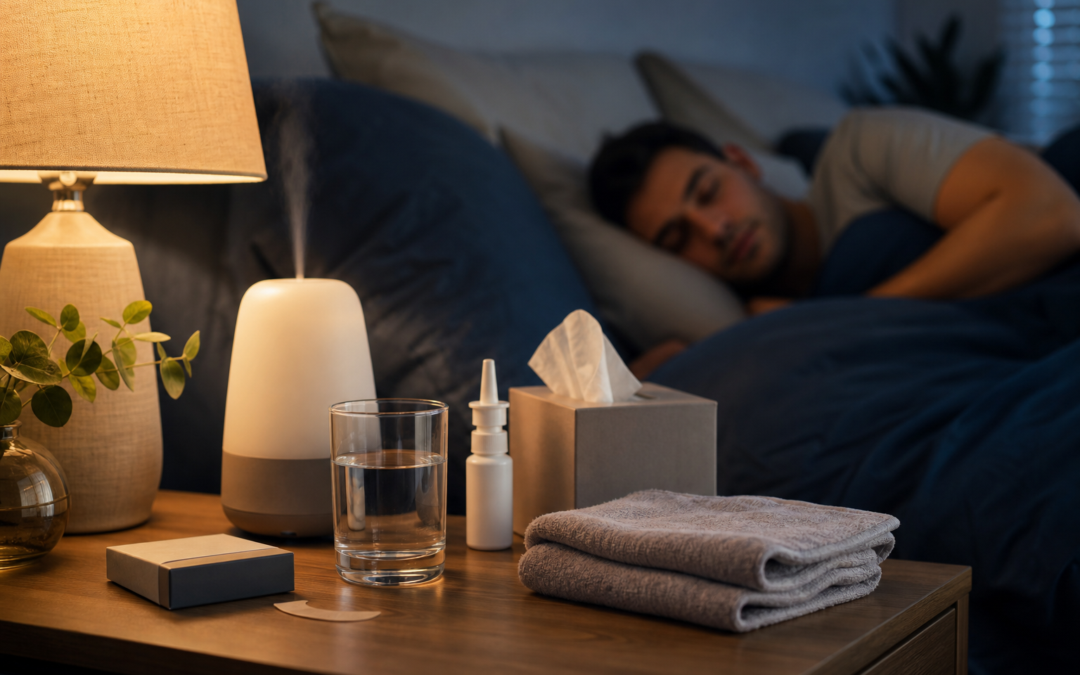
Congestion can encourage mouth breathing and snoring. Saline rinses, allergy management, humidification, or discussing chronic congestion with a clinician may help some people.
Avoid promising that nasal strips, sprays, or other products will “fix” snoring. They may help airflow for certain nasal issues, but they are not a substitute for evaluation when sleep apnea warning signs are present.
Keep a consistent sleep schedule
Sleep deprivation may increase throat relaxation and worsen snoring. A steady sleep/wake rhythm supports better sleep quality and may reduce some snoring triggers.
Internal link opportunity: link to FSF’s “7-Day Sleep Reset” once drafted.
Revisit pillow height and head/neck position
An awkward neck angle can make breathing feel more restricted for some sleepers. A pillow that keeps the head and neck more neutral may help comfort and may reduce snoring for some people.
No product claims yet. If FSF later adds pillow or accessory recommendations, add affiliate disclosure near the recommendations and keep claims soft.
What not to do
Do not ignore dangerous sleepiness
If you are sleepy behind the wheel, that is not a “sleep hack” problem. It is a safety issue. Stop driving if unsafe and contact a clinician.
Do not self-treat suspected sleep apnea with random devices
Mouthpieces, chin straps, mouth tape, nasal strips, wedges, and apps may have roles in specific situations, but they should not be used to avoid care when breathing pauses, gasping, or severe sleepiness are present.
If sleep apnea is possible, the correct next step is evaluation—not assembling a gadget garage like you are building a budget wind tunnel.
Do not use mouth tape if breathing feels restricted
Mouth tape is not appropriate for everyone. Avoid it if you have nasal obstruction, suspected sleep apnea, breathing concerns, nausea/reflux risk, heavy alcohol use, sedative use, or any condition that could make restricted mouth breathing unsafe. When in doubt, ask a clinician.
Internal link opportunity: link to FSF’s mouth tape vs nasal strips draft.
Questions to ask your healthcare professional
Bring direct questions. It saves time and prevents the appointment from turning into a vague “I snore, please fix the engine noise” situation.
Ask:
- Do my symptoms suggest I should be screened for sleep apnea?
- Should I have an at-home sleep apnea test or an in-lab sleep study?
- Could medications, alcohol, allergies, nasal blockage, or weight changes be contributing?
- Are there warning signs that mean I should seek care sooner?
- If sleep apnea is diagnosed, what options fit my severity and anatomy?
- Are oral appliances, CPAP, positional therapy, or other approaches appropriate for me?
Bottom line
Snoring is common, and occasional light snoring is often more annoying than alarming. But snoring becomes more concerning when it is loud, frequent, disruptive, or paired with breathing pauses, gasping, choking, severe daytime sleepiness, morning headaches, high blood pressure concerns, or unrefreshing sleep.
The safest play is simple: track the pattern, try low-risk sleep setup changes if there are no red flags, and talk with a clinician when warning signs show up.
No miracle anti-snore gadget claims. Just clear information, sensible next steps, and appropriate caution with breathing-related symptoms.
Sources to verify/cite
- NHLBI, NIH — “Sleep Apnea Symptoms”: https://www.nhlbi.nih.gov/health/sleep-apnea/symptoms
- Mayo Clinic — “Snoring: Symptoms and causes”: https://www.mayoclinic.org/diseases-conditions/snoring/symptoms-causes/syc-20377694
- American Academy of Sleep Medicine — “Is it more than a snore? Recognizing sleep apnea warning signs”: https://aasm.org/is-it-more-than-a-snore-recognizing-sleep-apnea-warning-signs/
- Sleep Foundation — “Snoring: Causes, Dangers, and Treatment Options”: https://www.sleepfoundation.org/snoring
Suggested schema
“`json { "@context": "https://schema.org", "@type": "Article", "headline": "How To Know If Snoring Might Be More Than Annoying", "description": "Learn when snoring may deserve medical attention, including warning signs such as breathing pauses, gasping, daytime sleepiness, and morning headaches.", "author": { "@type": "Organization", "name": "Fast Sleep Fix" }, "publisher": { "@type": "Organization", "name": "Fast Sleep Fix" } } “`
Disclosure
Fast Sleep Fix may earn a commission if affiliate links are added to this article in the future. This version was published without active affiliate links.