

Last updated: February 2026
Snoring affects roughly 45% of adults at least occasionally, according to MedlinePlus, and about 25% are habitual snorers. If you’re the snorer, you probably don’t think it’s a big deal. If you’re the person lying next to one, you know it absolutely is.
The good news: there are more anti-snoring solutions available now than ever. The bad news: most comparison articles are just thinly veiled ads for one product. This isn’t that. We’re going to walk through the major categories honestly, explain who each type works best for, and give you a framework for deciding what to try first.
Why Do People Snore?
Snoring happens when airflow through the nose and throat is partially obstructed during sleep. The tissues vibrate, producing sound. Common causes include nasal congestion, mouth breathing, sleeping on your back, excess tissue in the throat, and alcohol relaxing the airway muscles.
The right anti-snoring solution depends on where and why you’re snoring. That’s why one product can be life-changing for one person and useless for another.
The Comparison Matrix
Here’s a practical breakdown of the main categories:
Mandibular Advancement Devices (Mouthpieces)
How they work: Hold your lower jaw slightly forward to open the airway.
Best for: Mouth-based snoring, tongue-based obstruction.
Comfort: Moderate — takes 1–2 weeks to adjust. Jaw soreness and drooling are common initially.
Cost: $30–$100 for over-the-counter; $500+ for custom-fitted from a dentist.
Speed: Often works from night one.
Common complaints: Jaw discomfort, dry mouth, tooth shifting with long-term use of poorly fitted devices.
Return policy: Varies — some brands offer 30-day guarantees.
Nasal Strips and Dilators
How they work: Physically open the nasal passages (strips from outside, dilators from inside).
Best for: Nasal congestion snoring, mild nasal obstruction.
Comfort: High — most people barely notice them.
Cost: $5–$15 per box (strips are disposable; dilators are reusable).
Speed: Immediate.
Common complaints: Strips can irritate skin; dilators can feel weird initially.
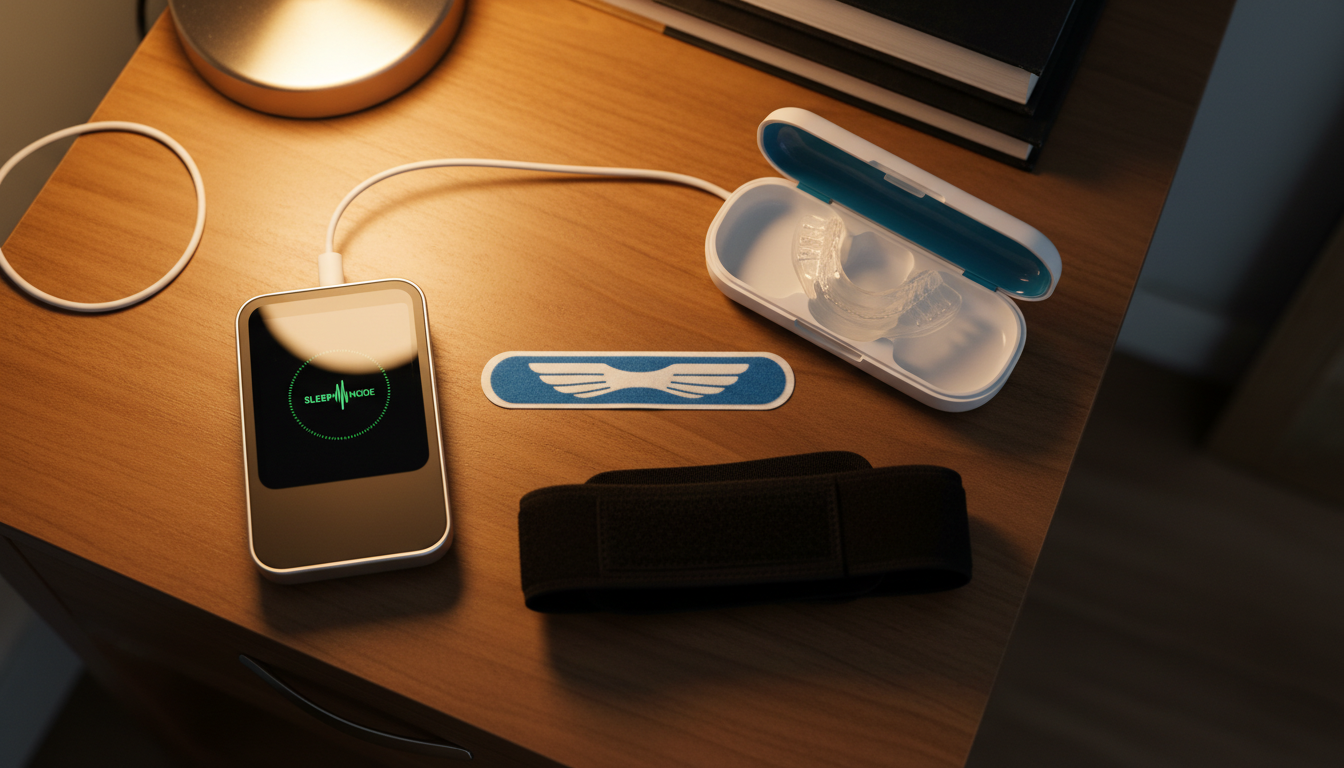
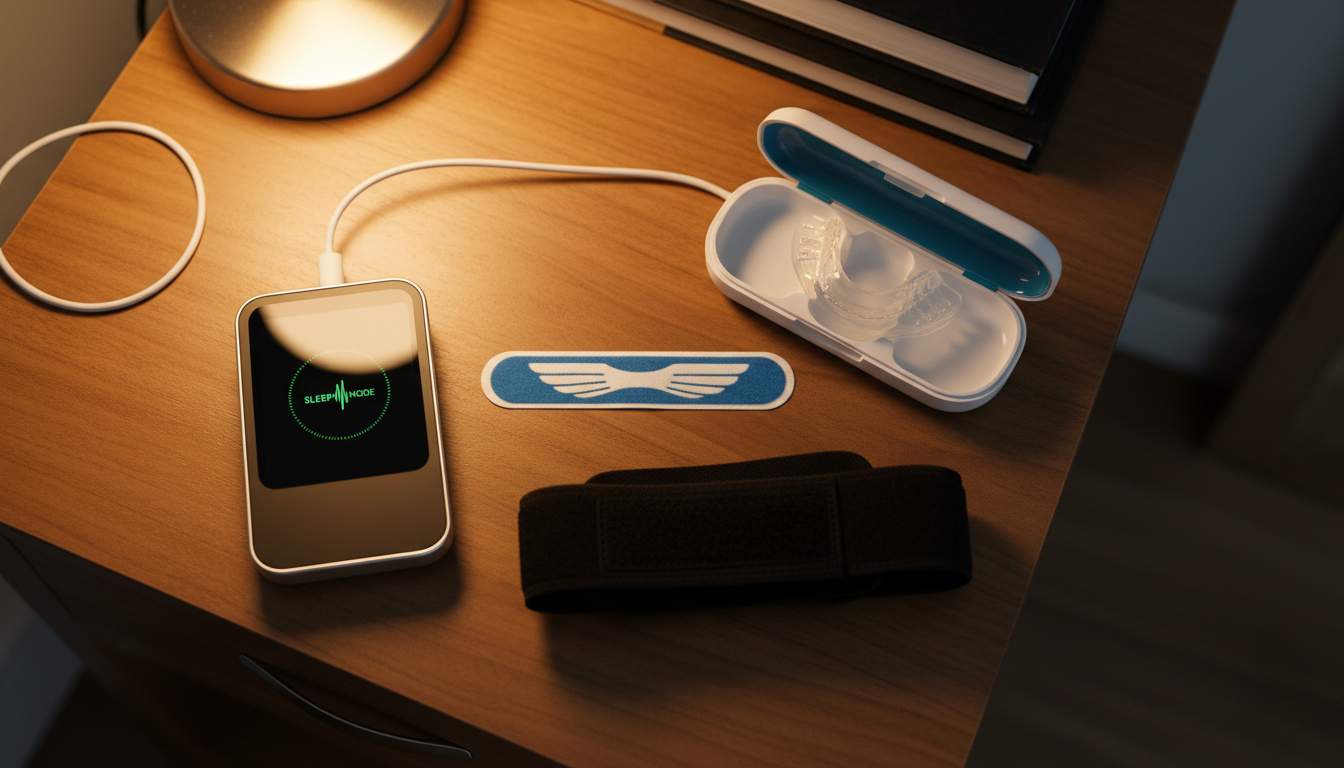
Smart Devices (Smart Nora, Anti-Snore Pillows)
How they work: Detect snoring and gently adjust head position or pillow inflation.
Best for: Positional snorers; couples where the partner wants a non-invasive solution.
Comfort: High — you don’t wear anything.
Cost: $150–$400.
Speed: Usually within the first few nights, with sensitivity adjustments.
Common complaints: Some devices can be noisy; may not work for heavy snoring.
Positional Therapy Devices
How they work: Prevent you from sleeping on your back, where snoring is typically worst.
Best for: People who primarily snore when on their back.
Comfort: Moderate — takes adjustment.
Cost: $30–$150.
Speed: Immediate for positional snoring.
Common complaints: Can feel restrictive; tennis-ball method (DIY) is uncomfortable.
Mouth Tape
How it works: Gently holds lips together to promote nasal breathing.
Best for: Mild mouth-breathing snorers with clear nasal passages.
Comfort: Moderate — many people adjust quickly.
Cost: $5–$20.
Speed: Immediate.
Common complaints: Anxiety about restricted breathing; not suitable for nasal obstruction.
See our full mouth tape guide for details.
Partner-Friendly Picks
If the snoring is driving your partner out of the bedroom, the fastest path to peace is usually a combination approach: a mouthpiece or nasal solution for the snorer, plus earplugs or a white noise machine for the partner. Check our earplugs guide and white noise roundup for the partner side of the equation.
Travel-Friendly Picks
Traveling with a snoring solution adds a logistical challenge. Nasal strips and mouth tape are the easiest to pack. Mouthpieces are small but need cleaning supplies. Smart devices like Smart Nora are portable but bulky. For travel, we’d suggest nasal strips or a compact mouthpiece.
When to See a Doctor
If your snoring is loud enough to wake others, if you’ve been told you gasp or stop breathing during sleep, or if you feel excessively tired during the day despite adequate sleep time, please see a healthcare provider. These are potential signs of obstructive sleep apnea, which requires proper diagnosis and treatment — over-the-counter products are not a substitute for a sleep study.
The Bottom Line
There’s no universal “best” anti-snoring product because snoring has different causes. Start by identifying your type (nasal vs. mouth vs. positional), try the most comfortable and affordable option in that category first, and give it at least a week before judging results.
For individual product deep-dives, see our Smart Nora review and mouthpiece comparison.