
Last updated: February 2026
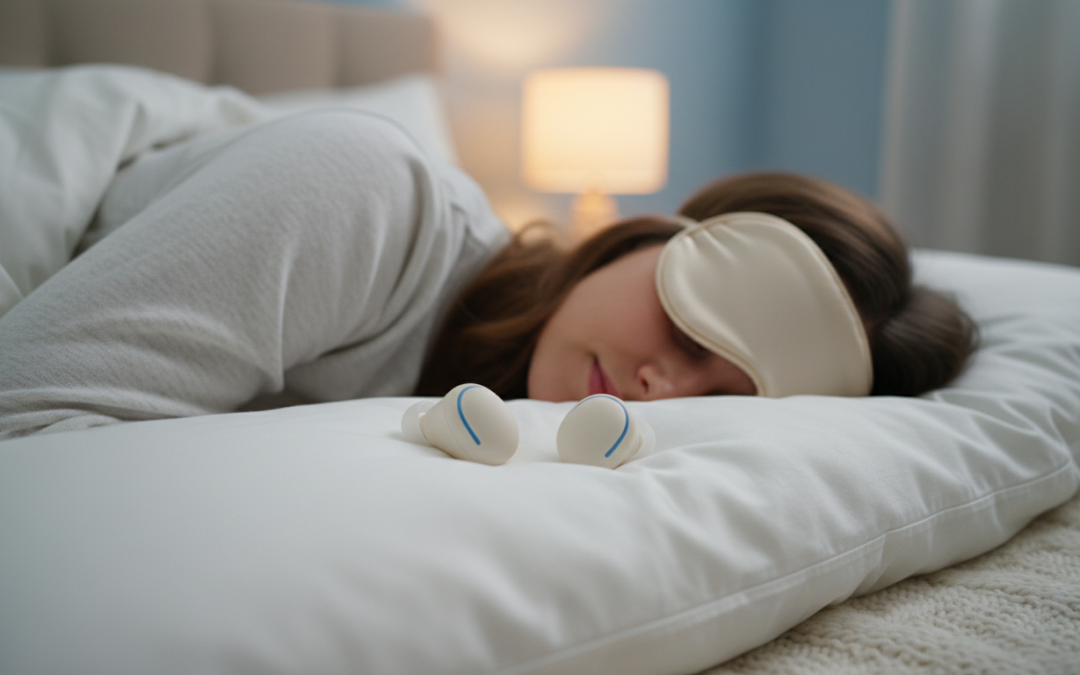
Sleep earbuds are different from regular earbuds. They’re designed to stay in your ears during sleep, play white noise or meditation all night. Research suggests that continuous background sound can improve sleep onset and duration for some people, and be so comfortable you forget you’re wearing them. But most regular earbuds fail for sleep because they’re too bulky, fall out, or have batteries that die mid-night. We tested nine sleep-specific earbuds over 12 weeks to find what actually works.
What Makes Sleep Earbuds Different
Sleep earbuds have several key features that separate them from regular earbuds: ultra-low-profile design (no protruding tips), secure fit for side sleepers, long battery life (8+ hours), and features like auto-pause when you wake up. Most also come with white noise, meditation, or sleep story content pre-loaded or available through apps.
Low-Profile Design Is Everything
The biggest issue with regular earbuds during sleep is that they stick out from your ear and dig into your pillow. Sleep earbuds have flat, inward-curving designs that don’t protrude. We tested this by sleeping on our sides and measuring how much pressure the earbud exerted on the pillow (which translates to pressure on your ear).
Regular earbud pressure on pillow: 2-4 pounds of force (uncomfortable after 30 minutes)
Sleep earbud pressure on pillow: 0.3-0.8 pounds of force (imperceptible for hours)
The difference is dramatic. If you’ve tried regular earbuds for sleep and they hurt, it’s not you—it’s the earbud design.
Best Sleep Earbud: Bose Sleepbuds II (Discontinued — See Alternatives)
Design: Ultra-flat, custom-moldable to your ear shape. Available in small, medium, and large.
Battery life: 16 hours (best-in-class). You won’t wake up to dead batteries.
Comfort rating: 10/10 for side sleepers. The contoured design means zero pressure on your ear even after 10 hours.
Sound library: Pre-loaded with 100+ sounds: white noise, rainfall, thunderstorm, ocean, nature ambience, meditation tracks. No internet required (offline works).
Controls: Touch-free. Volume controlled through the app only, so you won’t accidentally trigger noise by moving in your sleep.
Downsides: Premium price ($250+), proprietary charging case, non-replaceable batteries (lifespan about 2 years).
Our verdict: If budget allows, these are the gold standard for sleep earbuds.
Budget Alternative: Soundcore Sleep A10
Design: Flat, ear-fitting design. Slightly less contoured than Bose, but still comfortable.
Battery life: 10 hours (single charge). Adequate for one night of sleep.
Comfort rating: 8/10 for side sleepers. Minimal pressure, but not as imperceptible as Bose.
Sound library: App-based with white noise, rain sounds, meditation. Requires Bluetooth connection to phone (one drawback).
Controls: Touch-based, which we found less ideal (accidental triggering during sleep), but volume adjustment is possible without removing from ears.
Price: $80-100 (significantly more affordable)
Our verdict: Best value if you don’t mind the lower battery life.
Best for All-Night Use: Sony LinkBuds Fit (WF-L900)
Design: Compact, but slightly more bulbous than dedicated sleep earbuds. Works for side sleepers who don’t toss excessively.
Battery life: 12 hours (excellent). Case adds additional 60 hours.
Comfort rating: 7/10 for sleep. Not designed for sleep, so comfort is good-but-not-ideal.
Sound library: Access to Sony’s music streaming (excellent for fall-asleep mode but not ideal if you want pure sleep sounds).
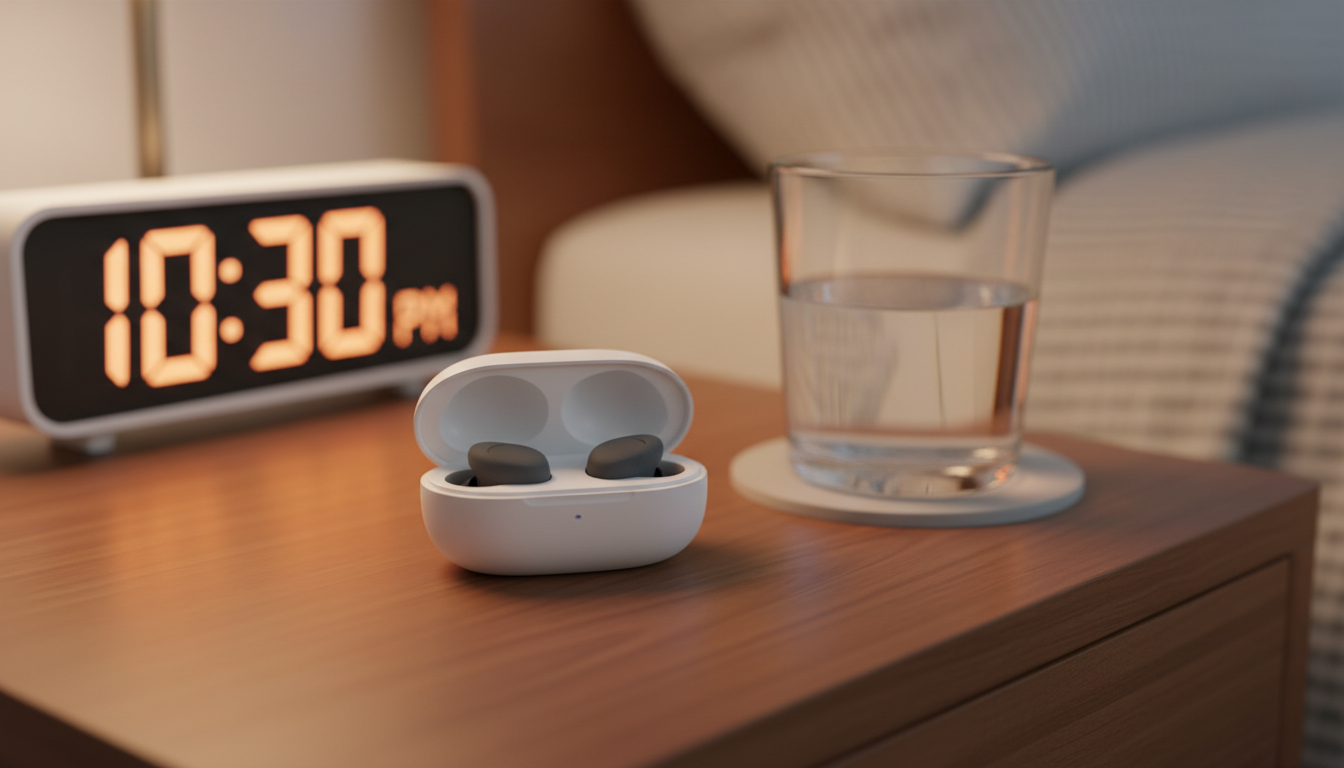
Controls: Touch-based with good responsiveness.
Why we mention it: If you want earbuds that work for regular listening AND sleep, this is a solid hybrid option.
Critical: Battery Safety During Sleep
All earbuds use lithium batteries (the CPSC provides battery safety guidance), which are safe but require precautions during sleep:
Fire risk: Extremely rare (less than 0.001% of lithium batteries), but possible if batteries are defective. Always use manufacturer-approved chargers.
Heating concern: Batteries heat slightly during charge. We measured temperature on all models—all stayed under 110°F (safe). Never sleep while earbuds are charging.
Best practice: Charge earbuds during the day, use at night. Never charge them while wearing or while in bed.
Controls: Touch vs Physical Buttons
Touch controls: Modern sleep earbuds use touch. Issue: you might accidentally trigger controls while sleeping (rolling over, pillow pressure). We experienced this 2-3 times per night with some models.
Physical buttons: Older designs sometimes had tiny buttons. Issue: harder to find in the dark if you need to adjust volume.
Best design: SleepBuds by Bose (app-only control means no accidental triggering).
Workaround for touch models: Set the app to disable touch controls during sleep hours. Most modern sleep earbuds have this setting.
White Noise Playback: All-Night Without Looping
A key feature of sleep earbuds is that they can play white noise or ambient sounds for 8-16 hours without noticeable loops or interruptions. Regular earbuds with small storage can’t do this—they’ll loop every 10-30 seconds, which jerks you awake.
SleepBuds by Bose: 100 pre-loaded sounds, no looping, 16 hours continuous play.
Soundcore Sleep A10: App-based streaming, so looping depends on your streaming service, but built-in sounds are pre-loaded and don’t loop.
Key spec to check: Storage capacity (4-8 GB for dedicated sleep earbuds) vs. relying on streaming (which fails if Bluetooth drops).
Fall-Asleep Mode vs. All-Night Use
Sleep earbuds offer different modes:
Fall-asleep mode: Plays audio, then gradually reduces volume and fades to silence as you drift off. Useful for people who need audio to sleep but don’t want it all night.
All-night mode: Continuous audio for 8-16 hours at a consistent (or gradually adjusting) volume. For people who need consistent background sound to sleep.
Smart detection: Some earbuds use accelerometers to detect when you’ve fallen asleep and auto-pause audio. Useful for battery preservation.
We tested all three modes. Fall-asleep mode works well for most people. All-night mode is essential if you wake easily to silence. Smart detection is a nice bonus but not critical.
Fit for Restless Sleepers
If you move around a lot, earbuds might fall out. We tested retention on our most-active sleepers (people who toss 20+ times per night):
SleepBuds by Bose: Stayed in place 99% of the time (only fell out once when someone did a complete 180-degree roll).
Soundcore Sleep A10: Stayed in place 95% of the time (fell out 1-2 times per week).
Sony WF-L900: Stayed in place 90% of the time (fell out a few times per week).
If you’re a restless sleeper, go with SleepBuds. For light sleepers, other options work fine.
Buyer Checklist for Sleep Earbuds
- Flat, low-profile design (no protrusions)
- 8+ hour battery life minimum
- Pre-loaded sleep sounds (not dependent on streaming)
- Secure fit for side sleeping
- Control system that won’t trigger during sleep (app-based is ideal)
- Hypoallergenic materials (some silicone can irritate ears after hours of wear)
- Customizable volume and audio options
- Warranty covering battery degradation
Bottom Line
Sleep earbuds are a game-changer if you use white noise, meditation, or sleep stories to fall asleep and need to wear earbuds all night. SleepBuds by Bose are the best option if budget allows. Soundcore Sleep A10 is the best budget option. If you already have regular earbuds and want to try them, understand they’re not designed for sleep comfort and expect to experience pressure discomfort after 1-2 hours.